

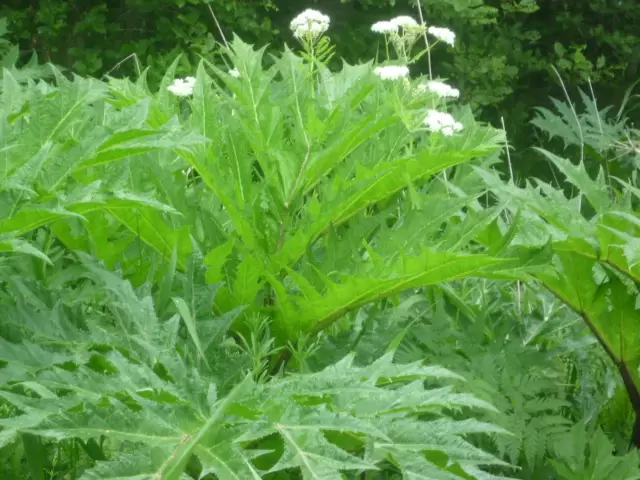
Protective clothing must be worn when controlling giant hogweed, as the plant contains toxic sap that can burn skin and cause long term skin damage when exposed to sunlight. Strimming or composting is NOT recommended.
Giant hogweed can grow up to 5m in height, shading out and inhibiting the growth of native plants. When it dies off in winter, bare soil is exposed on the banks of waterways, which washes away easily, and increases the risk of bank erosion. Each plant can produce up to 20,000 seeds that float down rivers and streams and contaminate other areas.
The main aim of controlling giant hogweed is to prevent flowering and seed production, as well as to remove or kill any growing plants to prevent people coming into contact with the leaves. Spraying with herbicide is normally used to control this species.
Optimum timing for control
The best time for control work with herbicides is in Spring, when the plants have reached a height of 20 – 50 cm and have not set seed. The low height of the plant will also allow access to the centre of stands.
Glyphosate is the only permitted herbicide to be used on plants adjacent to water, and is effective at controlling giant hogweed. SEPA’s General Binding Rule (GBR) 23 must be followed if any riparian control work is to be undertaken.
Follow up
Follow-up spraying is usually needed to treat seedlings that have germinated after the first treatment. It’s important to apply herbicide to both the top and underside of the leaves. Long-lance sprayers may improve accuracy of application. Glyphosate can be applied as a spot treatment to individual plants, using hand-held equipment.
Flower head prevention
Ultimately, control work should aim to prevent the plant producing flower heads. Cutting the flower head off is not recommended, as it will only encourage secondary flower spikes. Cutting at the base of the plant can be effective, but is also not recommended as the sap can cause burns to the skin. If the plant does manage to flower, the best advice is to reduce the seed fall by tying a plastic bag over any flower heads.
- ID sheet: http://www.nonnativespecies.org/downloadDocument.cfm?id=30
- Further information: https://www.invasivespecies.scot/giant-hogweed