

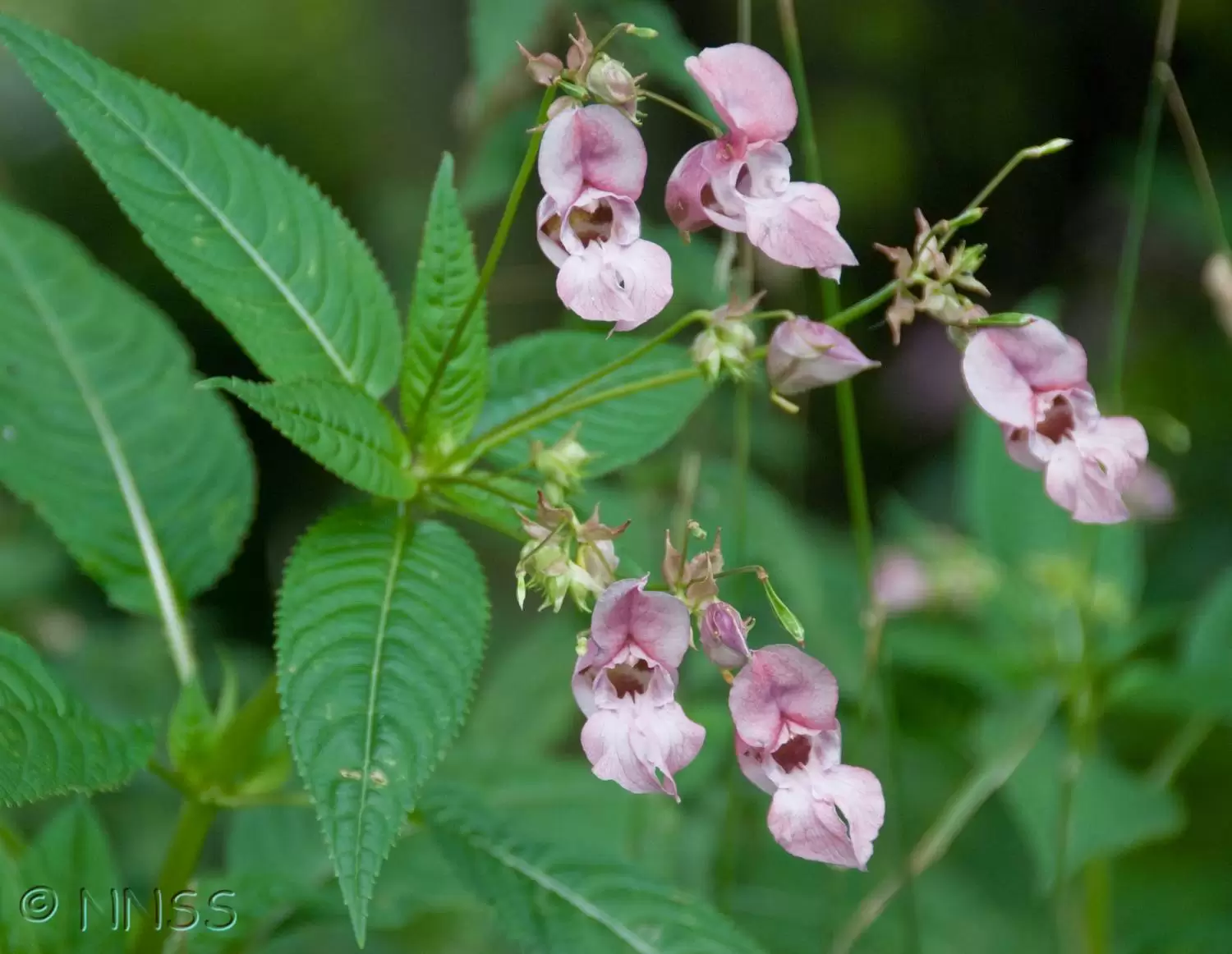
Himalayan balsam is an annual plant that grows from the previous year’s seeds. Control efforts aim to prevent the plant from flowering and setting seed, as the seeds are explosive and can spread viable seed over large areas.
Manual control
Scattered plants are best pulled by hand, being careful to remove the whole plant. Cutting or grazing of dense stands also works but cutting shouldn’t be attempted once the seed heads have formed, as this would effectively spread the plant.
Continual monitoring is important to prevent re-seeding as cut plants can re-grow. Time the first monitoring visit shortly after cutting, as Himalayan balsam can re-grow within weeks of control.
Chemical control
Chemical control can be used for high-density large populations but the use of herbicides near a watercourse is restricted and GBR23 must be followed. Chemical control can take up to two years to eradicate the plant (with additional monitoring following this).
Initial treatment should be carried out from May to early July, with follow-up visits to remove any late flowers and prevent seeding. This work should continue until the first frost of Autumn.
Follow up
It may also be necessary to consider a bankside rehabilitation programme to prevent erosion, once plants have been removed.
- ID sheet:
http://www.nonnativespecies.org/downloadDocument.cfm?id=33 - Further Information:
https://www.invasivespecies.scot/himalayan-balsam