Ambitious recovery programme launched as unprecedented decline in pearl mussel highlights fragile River Dee
 DeeWatch December
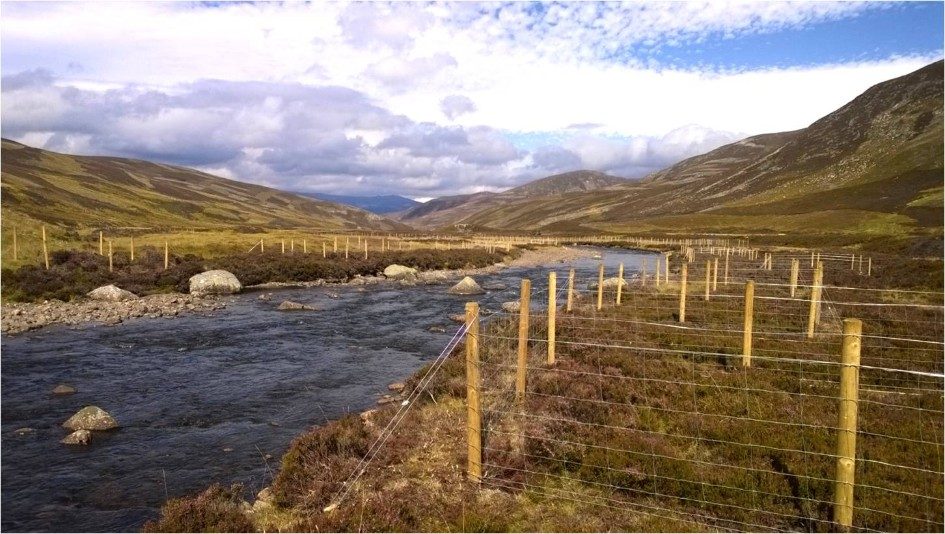
Driving towards Glenshee from Braemar, you can see some small enclosures (4 x 4 metres) surrounding trees planted along the banks of the River Clunie. You can also see a substantial area of woodland planting on the Clunie at Newbigging, for which 9 km of fencing has been installed. By 2016 70km of riverbank will be planted along the Dee, with over half already completed.
Planting trees along the riverbank is part of restoring the river corridor to how it once was. This benefits the river by reducing bank erosion, alleviating flooding, providing habitat for wildlife and creating shading over the watercourse. This shading will be important in the future as temperatures are predicted to rise due to climate change
Other habitat restoration work being done for the River as part of the EU Pearls in Peril project includes the installation of 45km of buffer strips to reduce diffuse pollution entering the watercourses. Already 10km of buffer strips in the Tarland catchment have been completed by working in partnership with farmers and the MacRobert Trust. Other tributaries that will have buffer strips installed are parts of the Dinnet and Dess Burns, as well as the Feugh.
The Pearls in Peril LIFE project is a UK-wide 4 year project that aims to restore habitat for freshwater pearl mussels. This large – £2.4 million – project is being delivered in partnership with the Dee District Salmon Fishery Board, River Dee Trust, SNH, Forestry Commission Scotland, Dee Catchment Partnership, SEPA , Cairngorms National Park Authority, the Estates of Mar, Mar Lodge and Invercauld and the Estate workers and farming community. All with vital financial support from the EU LIFE programme.