

 Ambitious recovery programme launched as unprecedented decline in pearl mussel highlights fragile River Dee
 DeeWatch December
Thirty one cars, tonnes of concrete, rocks and boulders have been removed from the banks of the Dee upstream of Braemar to restore the riverbank. The waste was packed into the riverbank in 1984 to repair a hole in the embankments that had opened up during floods in 1937.
With its corrugated iron facing, this 60m stretch of riverbank was an eyesore on the otherwise unspoiled landscape, clearly visible from the Linn O'Dee road. As well as being unsightly, the structure was causing erosion further downstream, damaging riverbed habitats for salmon and freshwater pearl mussel. The structure itself was begining to break down and so removing the waste in a controlled way was essential to prevent it being released into the river by future floodwaters and causing environmental damage.
The waste has now been removed and the bank reprofiled to a more natural form.
The Dee Catchment Partnership has been working towards the removal of the cars for several years. First, Aberdeenshire Council commissioned a fully survey of the area, (funded by SEPA) to look at the different options available. Next, a Contaminated Land survey was undertaken by the Cairngorms National Park Authority, which showed that there was no contamination by oils or fuel at the site. The James Hutton Institute have set up equipment to monitor the environmental benefits of removing the waste.
The Dee District Salmon Fishery Board managed the removal of the waste as part of the EU Pearls in Peril (PIP) LIFE project, which is working on rivers across the UK to restore freshwater pearl mussel populations.
On the Dee, work by PIP includes planting woodland along 70km of riverbank to protect against the effects of future climate change; installing 45km of buffer strips in the middle catchment to protect watercourses from soil and nutrient runoff; an education programme in local schools throughout the catchment; and removing unnatural structures from the river, including the 'car embankment'. The PIP project should result in a wide range of environemental benefits for the whole river system by protecting river temperatures, improving water quality and helping flows to be more natural.
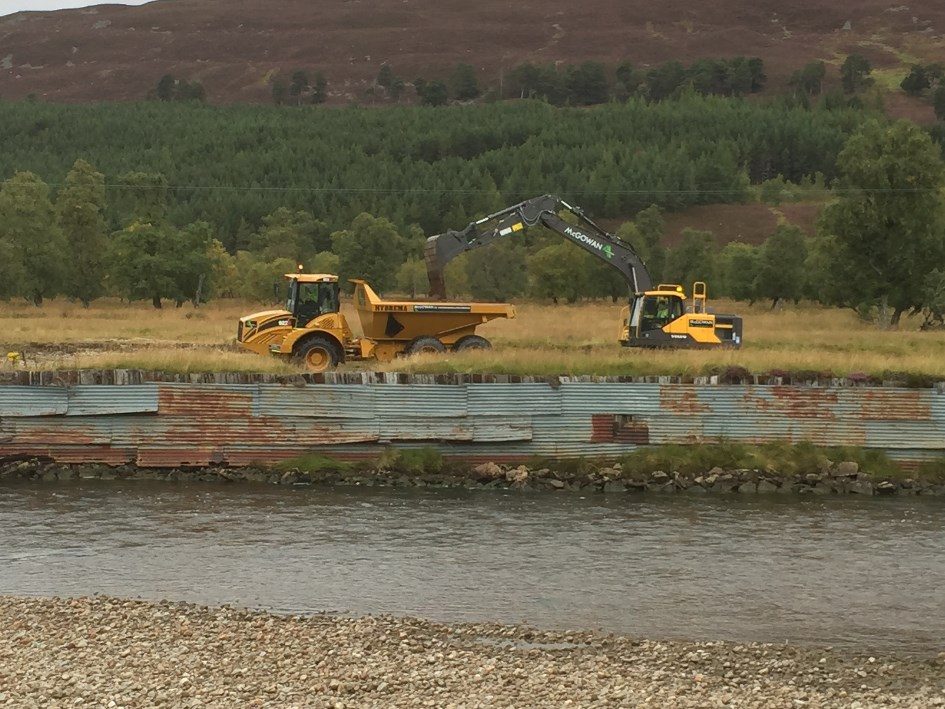
The works started on 21 September 2015 with the excavation of the cars.
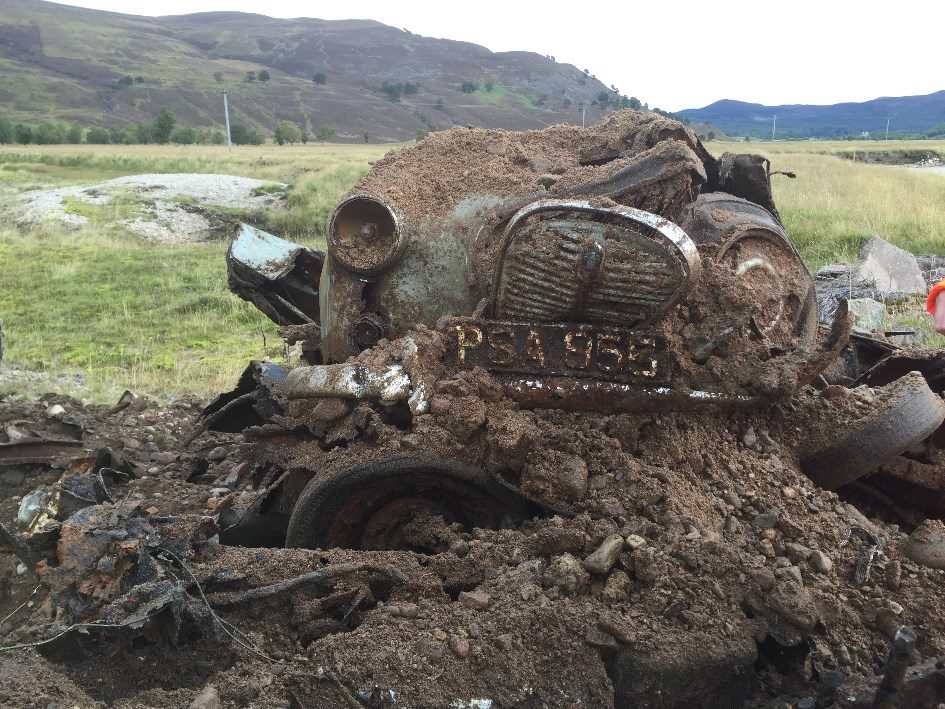
Most of the cars were in surprisingly good condition, given they had been in the riverbank for over 30 years.
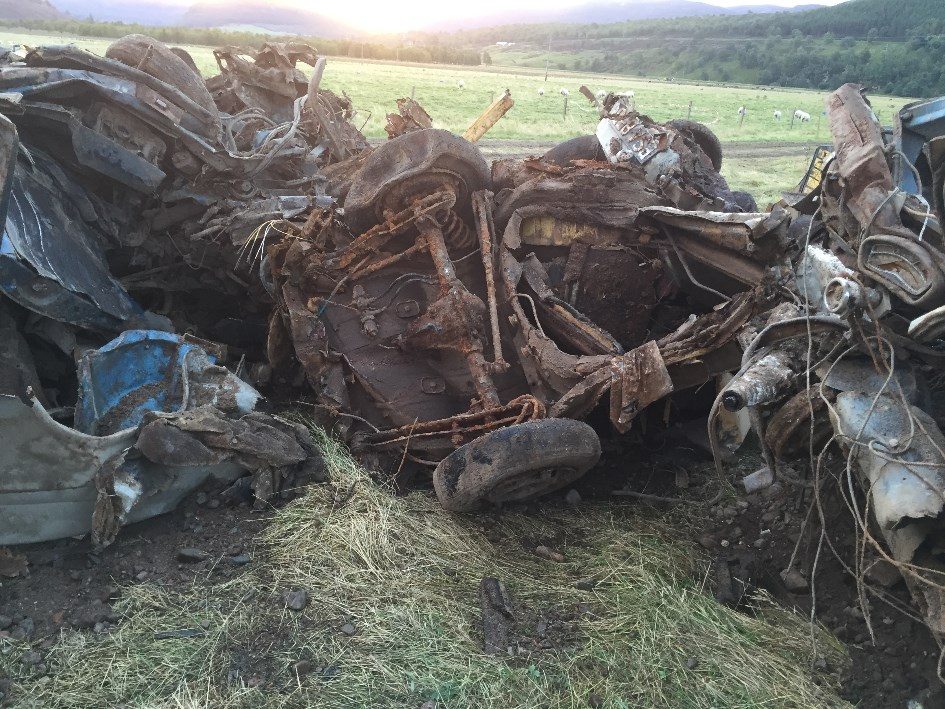
All of the waste has been removed from the site.
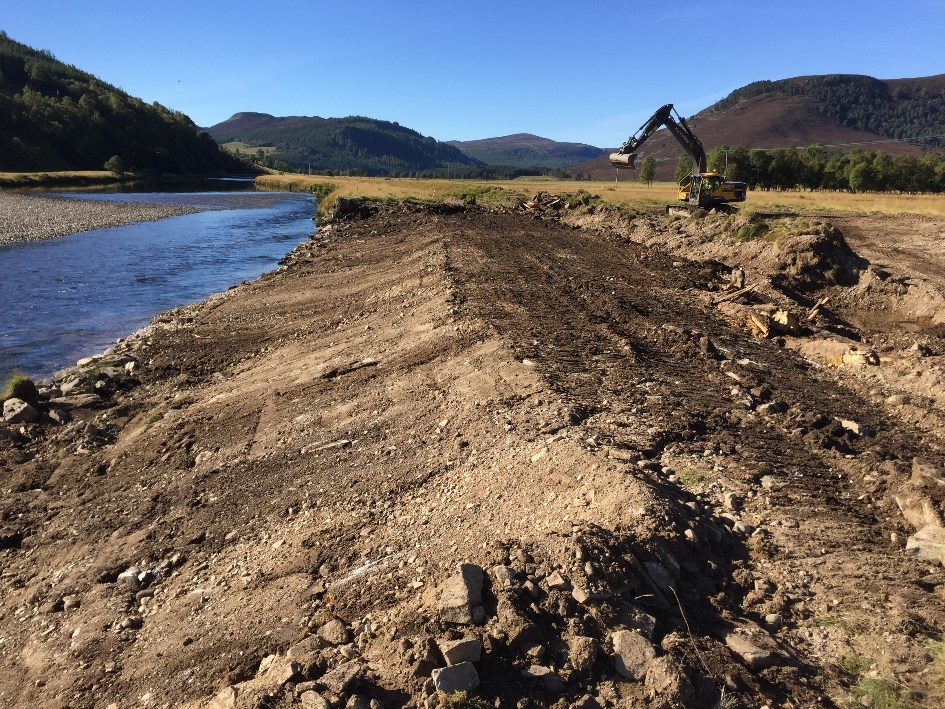
The bank has been reprofiled to a more natural shape.
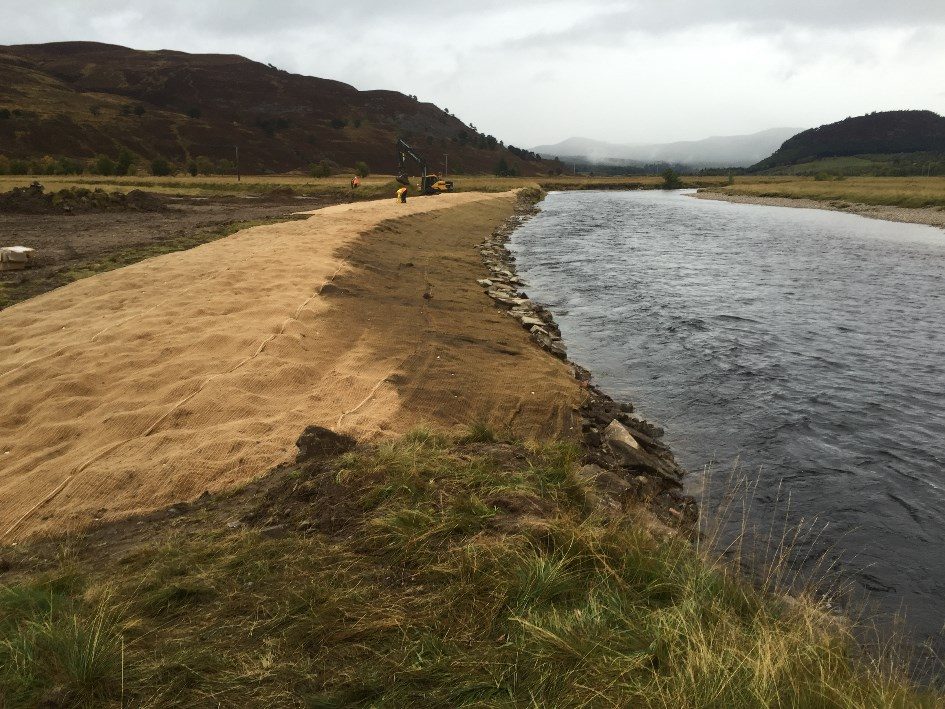
Coir matting has been laid over the bare soil – natural vegetation will quickly grow through and stabilise the riverbank.
All photos courtesy of the Dee District Salmon Fishery Board.