Ambitious recovery programme launched as unprecedented decline in pearl mussel highlights fragile River Dee
 DeeWatch December
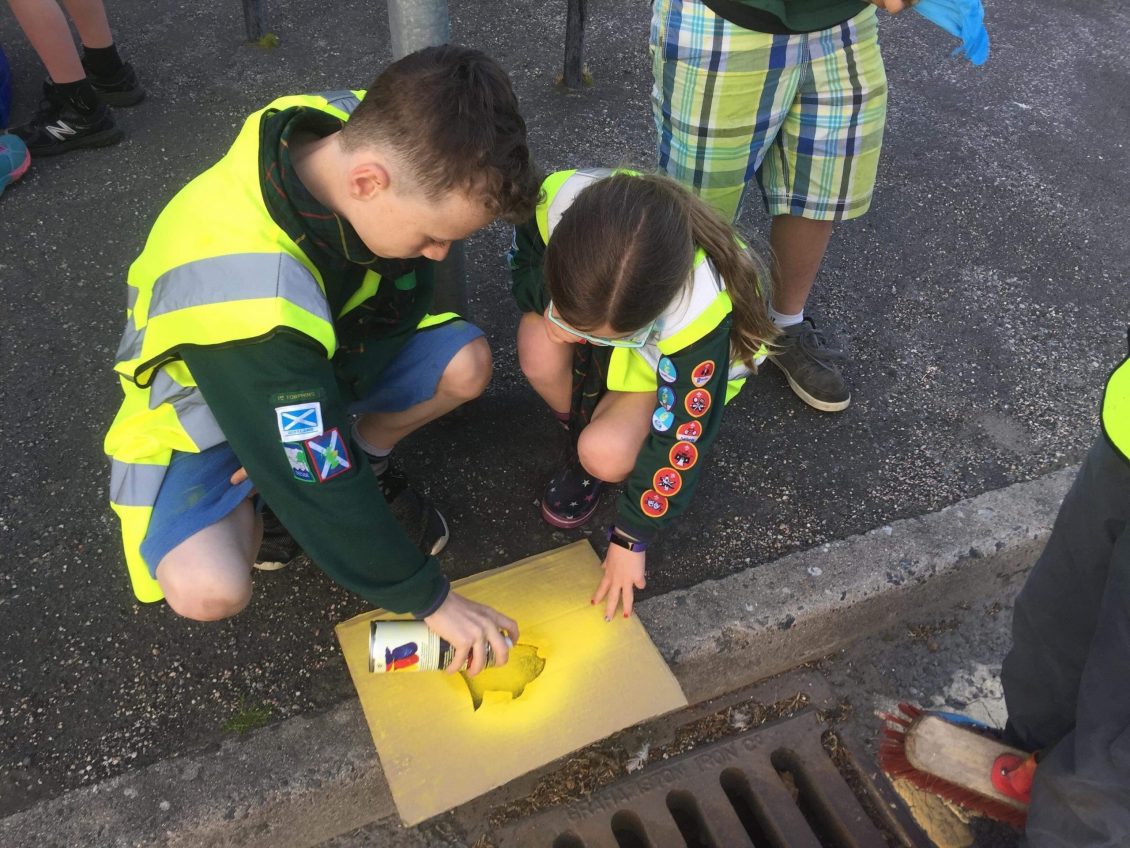
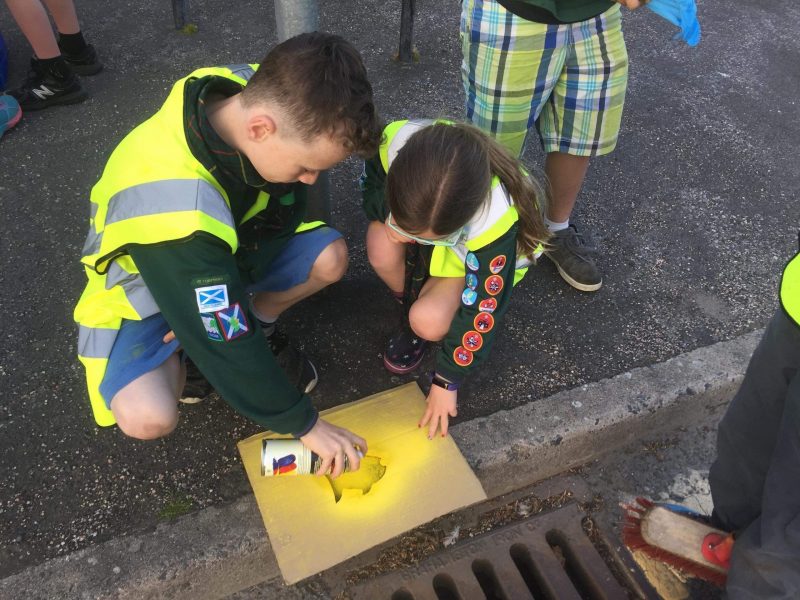
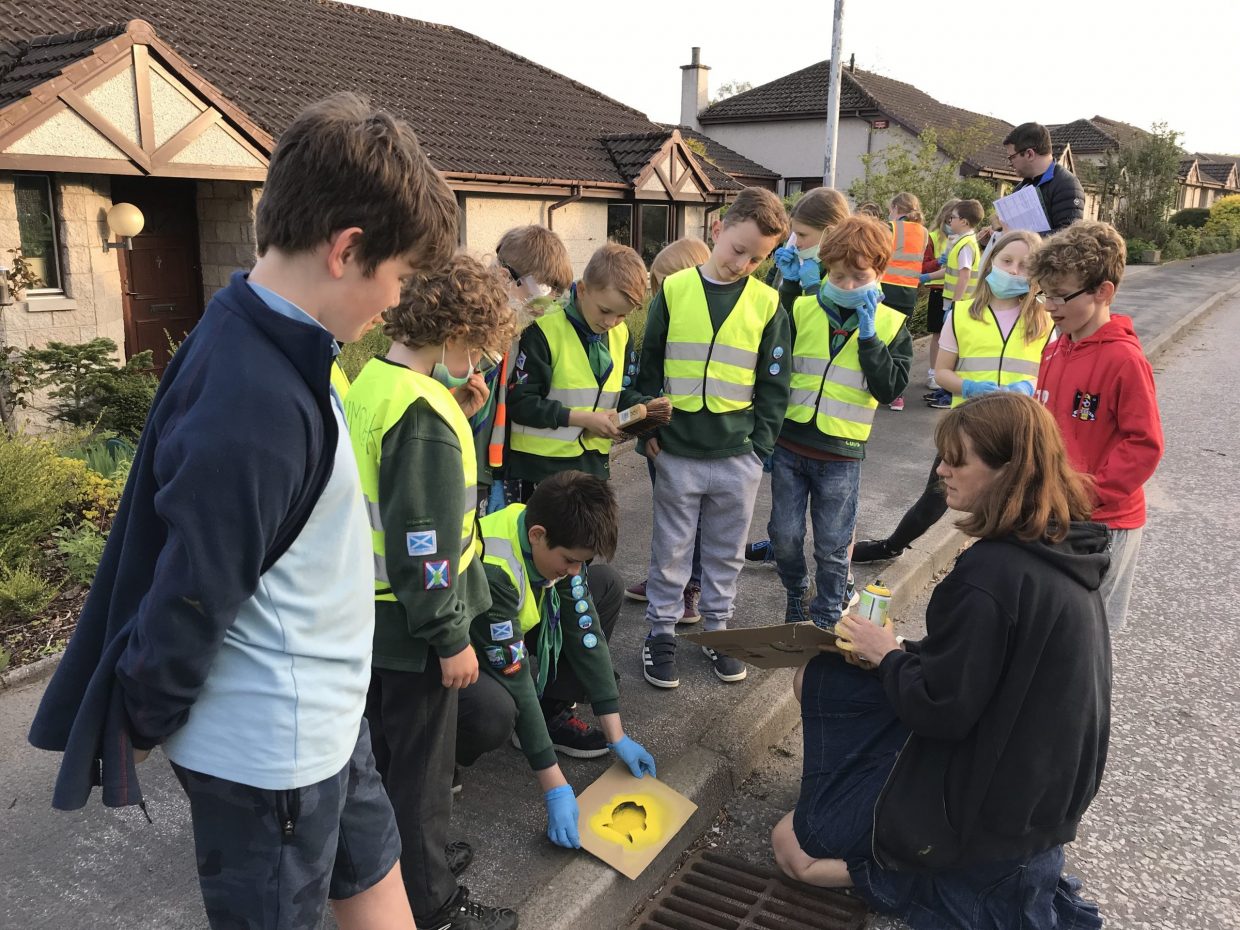
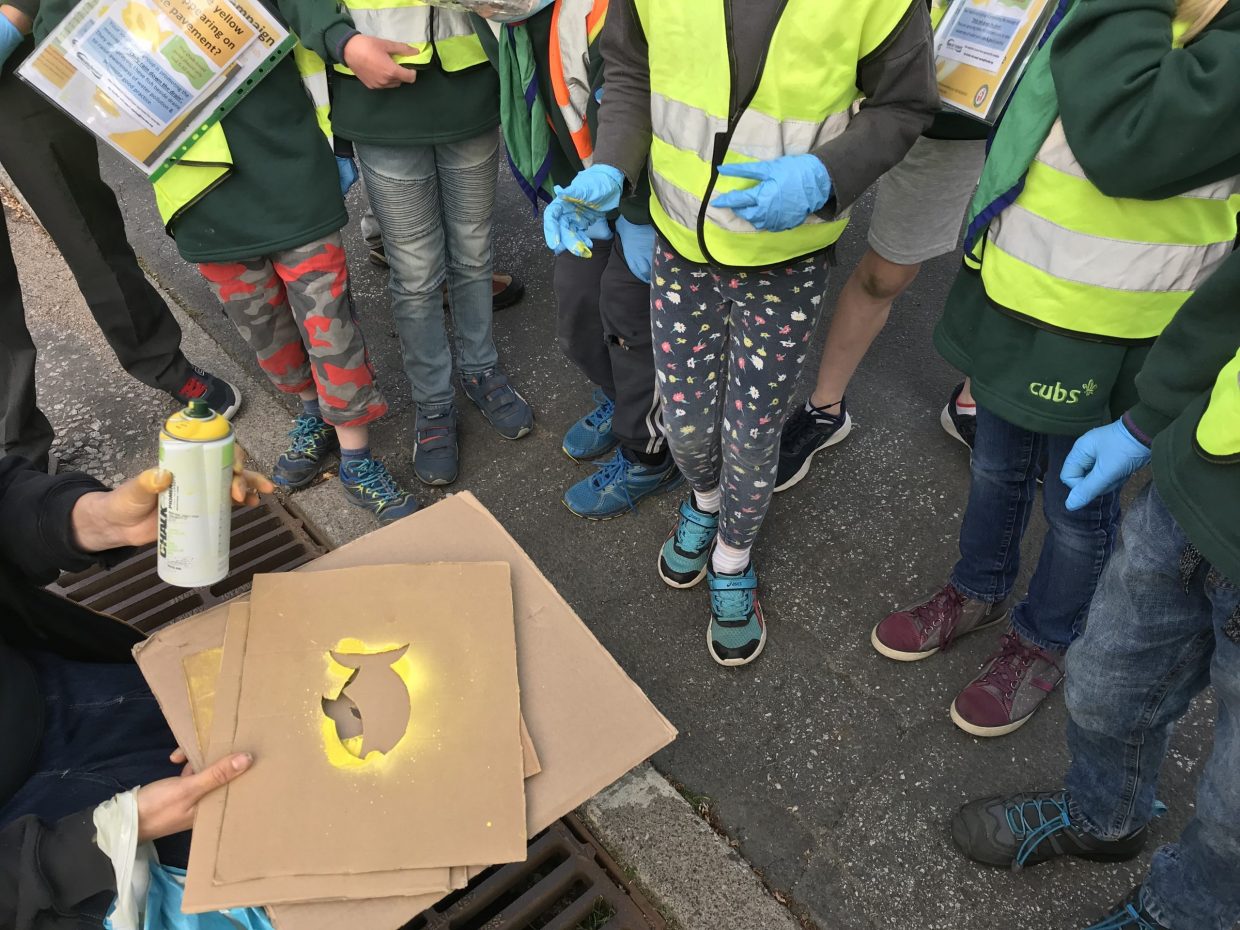
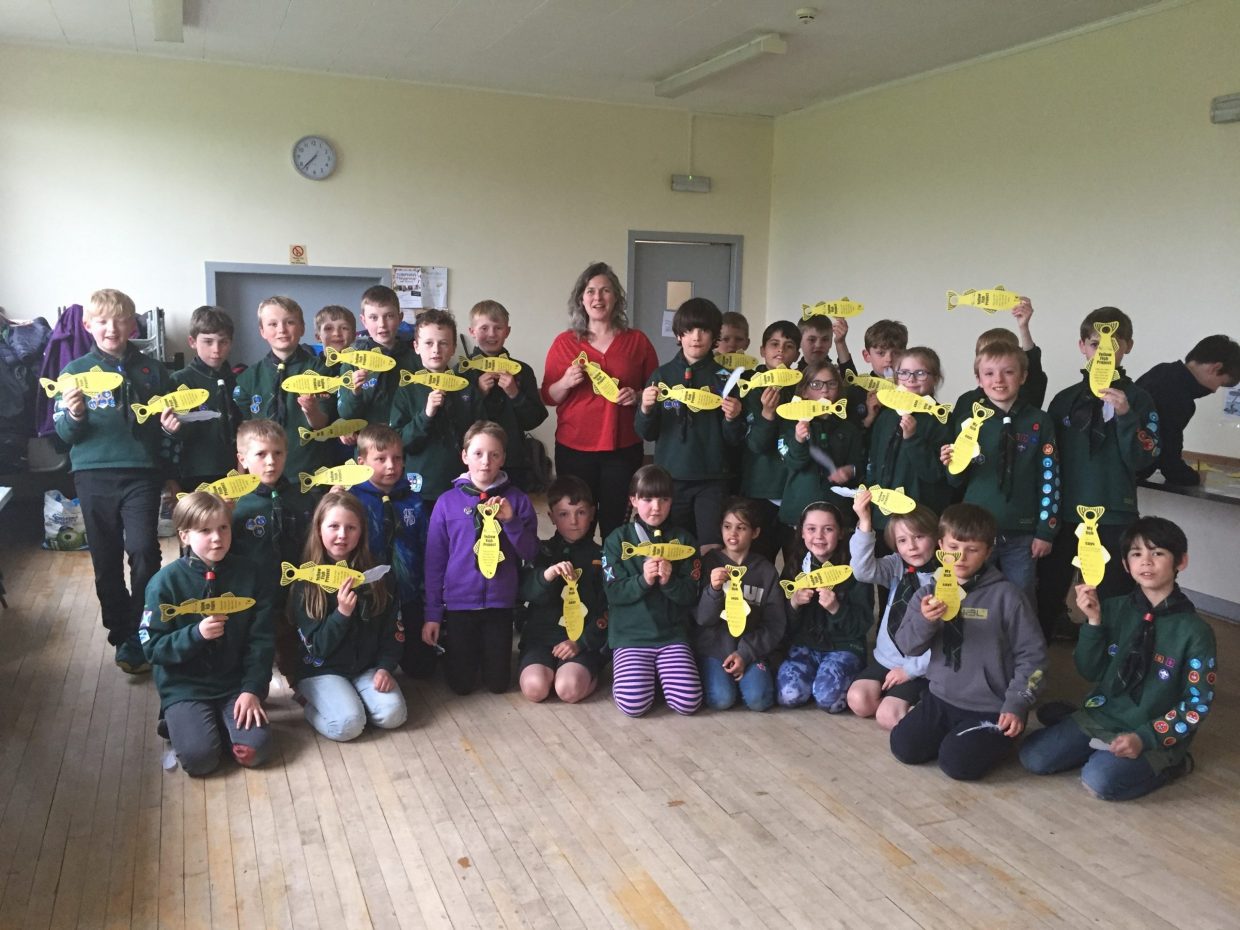
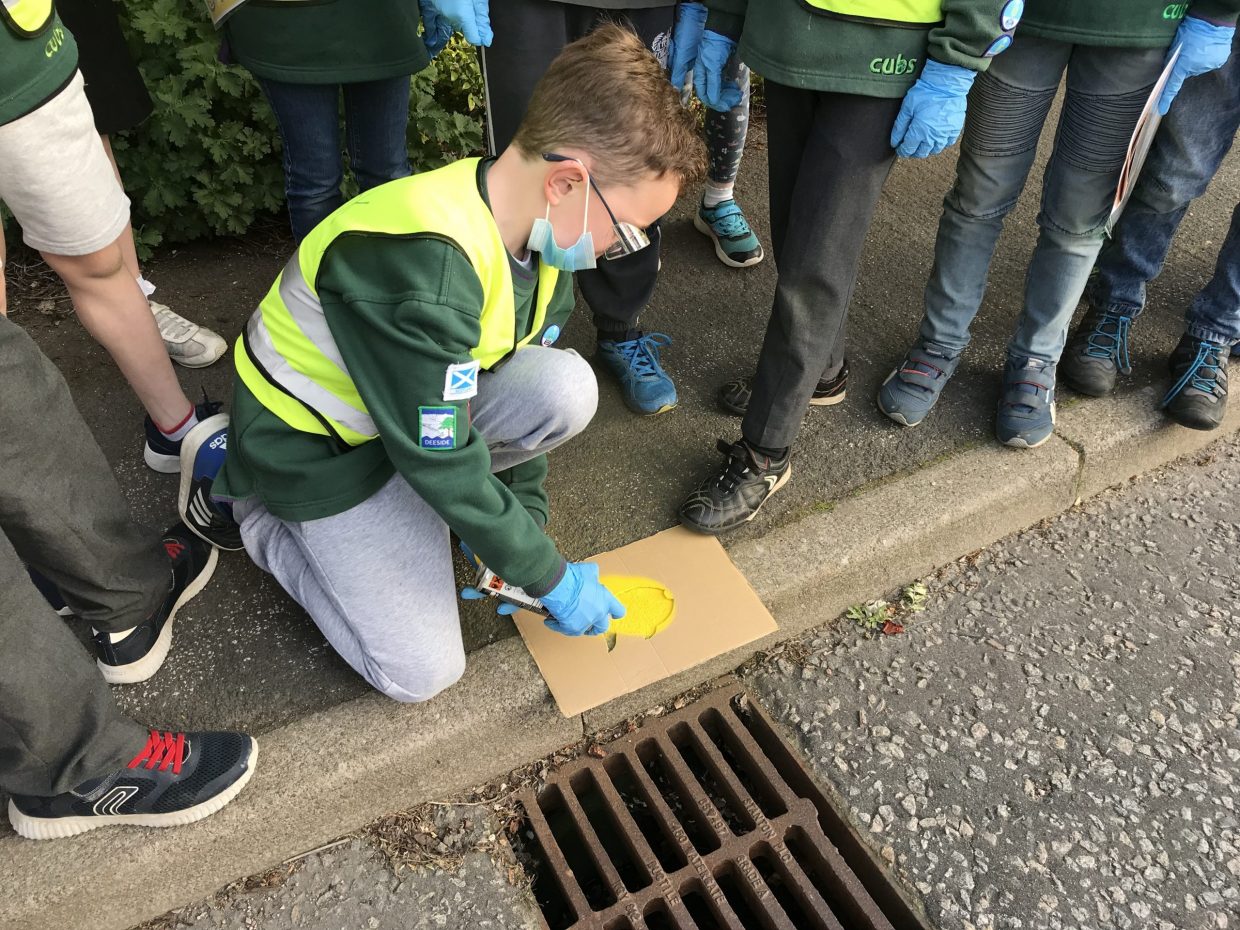
Residents of two Deeside villages may have spotted brightly coloured marine creatures appearing on their pavements and kerbsides this month, thanks to a local activity aimed at raising awareness of water pollution. The ‘Yellow Fish Campaign’, was undertaken by the Dee Catchment Partnership in collaboration with Drumoak and Torphins Scouts groups, in a bid to promote the message, ‘Only rain down the drain’.
Outreach Officer for the Dee Catchment Partnership, Marina Piper, explains:
“Our Yellow Fish campaign aims to highlight water pollution issues through a low-cost activity that promotes engagement with local communities. It involves using temporary chalk paint to stencil a yellow fish symbol close to drains, to remind the public that waste entering the drains may go directly to the nearest stream, river or beach, causing pollution and killing wildlife. Both Scouts groups did a fantastic job spray-painting their yellow fish throughout Torphins and Drumoak.”
Marina Piper, Outreach Officer for the Dee Catchment Partnership
Yellow Fish campaigns have become a popular and effective way to raise awareness that street drains are the doorways to our rivers. The Canadian ‘Trout Unlimited’ project kindly donated materials to help bring the project to Deeside in 2014, when Aberdeen Harbour Board initiated a Yellow Fish Project in the Torry area, in an effort to improve water quality in the harbour.
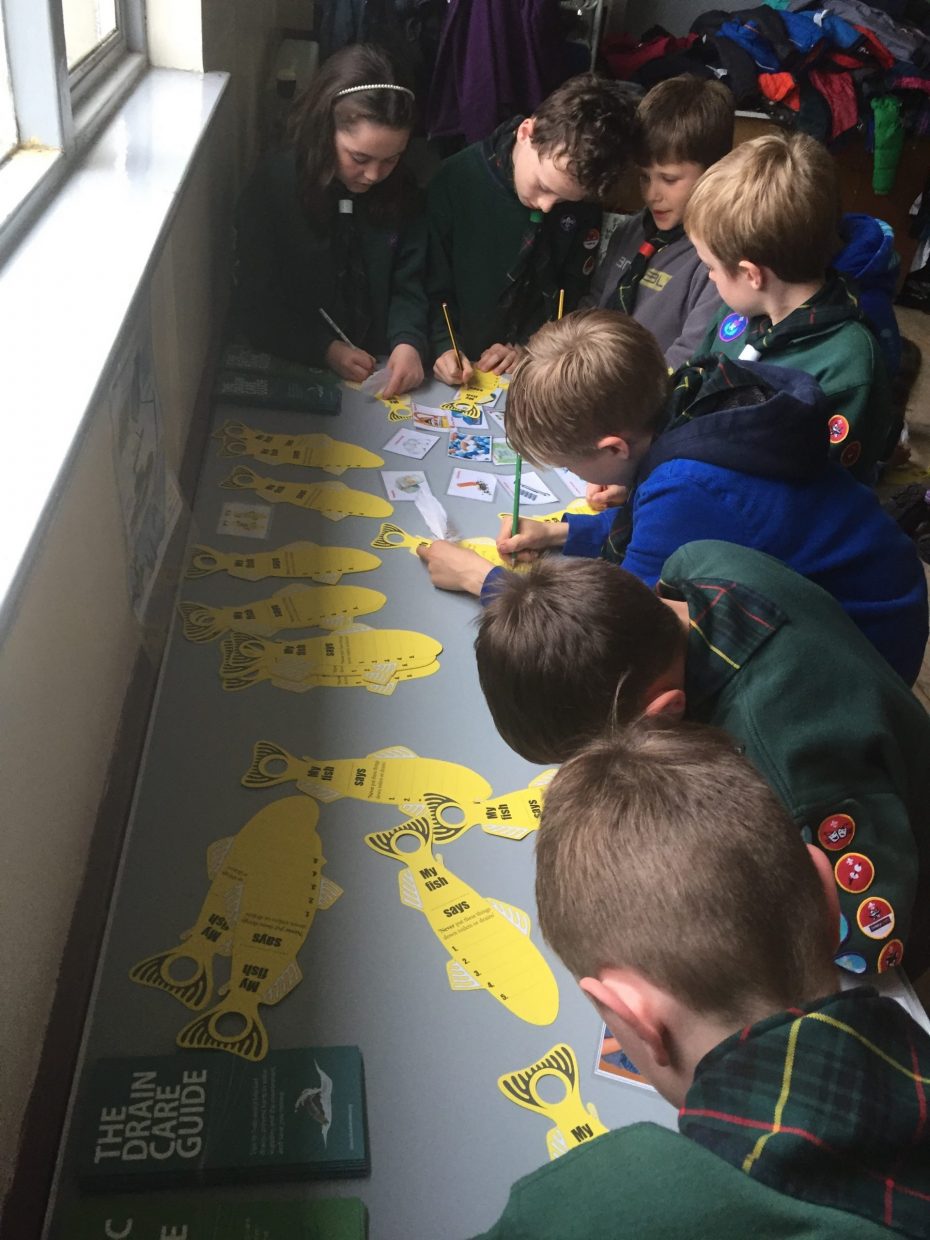
In addition to highlighting village drains, the Scouts learned about what can and cannot be safely poured down drains, and the consequences of various pollutants on plants, fish and aquatic life. One example is oil, which can have devastating effects even in small amounts, as Marina continues:
“Just one litre of oil can pollute one million litres of drinking water. Oils don’t mix with water – they spread out across it in a molecule-thick layer that is toxic to aquatic life and stops oxygen being absorbed on the surface. We talked with the Scouts about how to safely dispose of everything from engine oil to cooking oils and fats.
“Trying to reduce our water use is also vital in the battle against pollution. Our underground sewers are often functioning at full capacity and in flood conditions both sewage and grey water can spill out from combined sewers and flow directly into the river untreated. Phosphates in sewage, that can also seep from poorly-maintained septic tanks, cause increased plant growth on riverbeds and in streams, choking native wildlife. Pollution entering rivers also flows onto beaches and bathing waters – everything has a knock-on effect. Even soils and sands entering drains can cause sediment pollution in rivers, affecting fish spawning grounds.”
Marina Piper, Outreach Officer for the Dee Catchment Partnership
Councillor Moira Ingleby, Chair of Aberdeenshire Council’s Marr Area Committee, said:
“The Yellow Fish Campaign has proved to be really successful in raising awareness of how our surface water drains work and how important it is that we don’t put anything other than rain water into the system. Aberdeenshire Council supports this campaign and the Dee Catchment Partnership. Raising awareness with local scout groups is a really good way to spread the message as young people are usually very good at taking a message home and making sure adults also do the right thing.”
Councillor Moira Ingleby, Chair of Aberdeenshire Council’s Marr Area Committee
ENDS
For media enquiries please contact: Sally Wallis | [email protected] | 07961 980152 | 013398 85436