

 Ambitious recovery programme launched as unprecedented decline in pearl mussel highlights fragile River Dee
 DeeWatch December
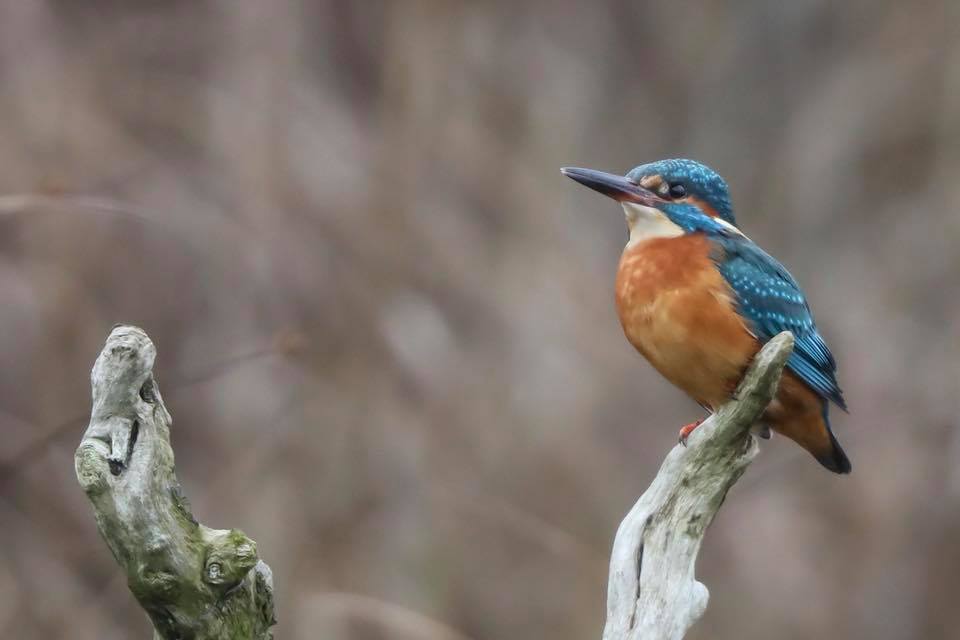
The Dee catchment is home to a rich and varied landscape of habitats. The rivers, streams, lochs and wetlands all support many rare species of plants and animals.
Lowland wetlands
The valleys of the Dee catchment hold a variety of wetlands.
- Several small lochs are scattered along the Dee Valley between Dinnet and Aberdeen. Lochs Davan, Kinord, Aboyne, and Skene are internationally recognised for their aquatic and marginal flora, wintering and breeding bird population and otters
- A few lochs are artificially impounded: Aboyne Loch is used for water skiing, but retains a nationally important aquatic plant community, and the Loch of Skene is a Special Protection Area for wintering geese
- Raised bogs are restricted with just a few examples occurring on the Muir of Dinnet, Red Moss of Netherley and Red Moss of Candaglirach near Banchory. The former two are designated Special Areas of Conservation
- Springs, flushes, fens, natural ponds, wet woodlands and wet hollows add to the diversity with valuable plant and invertebrate communities
Upland wetlands
The upland wetland habitats in the Dee catchment are of national and international importance for their communities of birds, invertebrates, and plants. They also play an essential role in regulating runoff after rain or snow, by absorbing large quantities of water and releasing it slowly.
- The most extensive wetland habitat in the uplands of the Dee catchment is blanket bog, which supports important plant and bird communities. Some of the upland blanket bogs are home to remnant populations of water vole which have been largely lost from the lowlands
- The lochans high in the Cairngorms are extremely poor in nutrients and hold specialised communities of flora and fauna of international importance
- Lower lochs such as loch Builg and Loch Callater support important populations of Arctic Char
Floodplains
The flat land through which the River Dee and its tributaries flow in the lower and middle catchments influences the behaviour of this dynamic river system. The constant processes of erosion and deposition of sediments that make up the river banks are the river’s way of dissipating energy, and in many sections these processes have caused the lateral migration of the river channel. Examples are numerous – stretches of the Dee where old river courses have been abandoned as the river has formed a new channel. In a few places where river banks are not reinforced, this process continues.
Regular flooding of the floodplains has been prevented by the construction of artificial embankments along much of the length of the Dee and its larger tributaries. Unfortunately this has meant the loss of temporary or seasonal wetlands that are important to birds, amphibians, invertebrates, and various plant communities. Such embankments protect the Deeside towns and smaller settlements from flooding as well as farmland and infrastructure, such as sewage treatment works. But by constricting the flow of water with artificially embanked channels, we can create serious consequences downstream.
The fertile soils of the floodplain make them extremely valuable for agriculture, which has led to the almost total clearance of woodlands in these areas, with only small pockets of alder and willow trees left. It has also resulted in historical drainage of former wetlands such as the Loch of Auchlossen near Lumphanan.
Wet and riparian woodlands
Wet woodlands are those found on floodplains, flushed slopes and peaty hollows, while riparian woodlands are those located on the banks of burns, rivers, and lochs. Both provide an important habitat for a number of plants, invertebrate, bird and mammal species, including a number of Local Biodiversity Action Plan priority species. The condition of these woodlands has been affected by a variety of factors such as clearance, planting of other tree species, overgrazing, drainage, flood prevention measures, dumping and invasion by non-native plant species.
Wet woodlands have an important role in linking terrestrial and freshwater ecosystems. They influence the health and productivity of rivers and burns, and provide exceptional value for nature conservation and amenity. Leaves and insects falling from trees provide essential food for aquatic invertebrates and fish, while tree roots stabilise riverbanks, capture and recycle mineral nutrients, and promote biodiversity both on the bank and in the watercourse. Riparian woodland can also protect rivers and burns from diffuse pollution from nearby conifer plantations and agriculture. Restoring the connectivity between riparian woods can help to develop forest habitat networks.
Bankside grasslands
The rich herb bankside grasslands along parts of the Dee and its tributaries are the remnants of what is thought to have once been a much more widespread plant community. The previous extent will have been limited by woodland clearance for farming and ongoing grazing by farm animals. The introduction of more intensive agricultural systems over the last 50 years – especially on the most fertile soils of the floodplains – has contributed to much of the loss, and today many of the remnants are found on river banks that cannot be cultivated. Bankside grasslands are therefore a very unusual habitat in Deeside and indeed throughout Britain, and those that remain are extremely important for nature conservation.
Species associated with these grasslands in Deeside include those formally typical of lowland communities, such as yellow rattle, cowslip, zigzag clover, wood cranesbill, lady’s mantle, melancholy thistle and globeflower, together with species brought down as a seed from the upland areas such as spignel and northern bedstraw. These grasslands have a high appeal to visitors as well as providing food for aquatic life in the form of seed and invertebrates that fall into the river.
Urban watercourses
Urban watercourses provide a range of management challenges. Conflicting pressures include the need for development space, the need for waste disposal, health and safety requirements, flood prevention and recreation. Historically, these pressures and the chosen approaches to managing them have often led to watercourses that provide few opportunities for wildlife. Extensive changes to watercourses also cause a loss of the social benefits of having more natural stream or river systems in the urban environment. Managed appropriately however, an urban watercourse can deliver important social benefits to the surrounding community while also supporting a valuable range of habitats and wildlife.
Information Maps
Scotland’s Environment Web hosts various map layers that provide a detailed mosaic of our local habitat.