

 Ambitious recovery programme launched as unprecedented decline in pearl mussel highlights fragile River Dee
 DeeWatch December
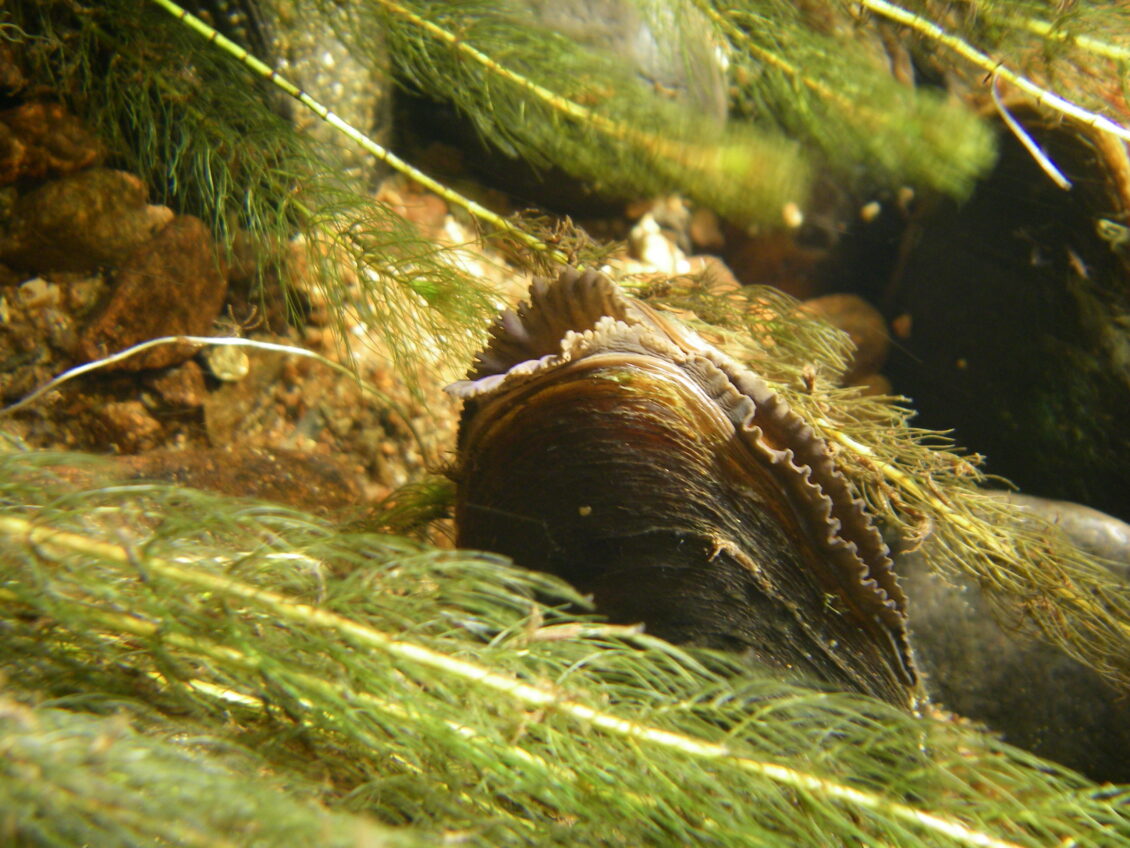
A recent report from the Dee Catchment Partnership reveals an unprecedented 89% decline in the population of freshwater pearl mussels in the river Dee since 2002. Summarising the results of a survey funded by NatureScot and the Cairngorms National Park Authority, the report attributes the loss to the events of Storm Frank in 2015, which washed away much of the riverbed, leaving the remainder highly unstable and largely unsuitable for pearl mussels. Now, the multi-agency partnership will begin setting out the urgent actions required to help revive the Dee’s population of this globally threatened species.
As one of the UK’s rarest aquatic creatures, the freshwater pearl mussel can live for over a century. Designated a Special Area of Conservation specifically for its pearl mussel populations (as well as those of salmon and otter), the river Dee was home to around 1 million of them in 2002; today only 16,000 remain.
Freshwater Ecologist at the Hutton Institute and Manager of the Dee Catchment Partnership, Dr Susan Cooksley, explains the surveying process: “Special Areas of Conservation are routinely monitored for changes. To understand the impact on the pearl mussels of the channel-changing floods of Storm Frank, we commissioned a repeat of the baseline survey undertaken in 2002, to understand the new distribution of pearl mussels in the Dee and compare it with previous data.”
Using the same methods as in 2002, the river Dee from Braemar to Aberdeen was surveyed for pearl mussels between August 2022 and April 2023. “To see a loss of this magnitude in a critically endangered species that’s protected by a raft of national and international legislation is devastating,” continues Susan. “The freshwater pearl mussel filters up to 50 litres of water a day, improving the quality of the water to the benefit of all river wildlife. It’s a highly sensitive indicator of a river’s overall health, and if the pearl mussel population is collapsing, it’s bad news for the entire ecosystem. The decline in their numbers and range has been rapid across the world – we’re seeing the same problems throughout Europe where urgent action is being taken.”
River Operations Manager for the Dee District Salmon Fishery Board and Trust, Edwin Third, agrees: “Our rivers are in crisis and a loss of the Dee’s freshwater pearl mussel population of this magnitude must be an urgent call to action. Our Atlantic salmon populations, on which these mussels depend, are also suffering major decline. Storm Frank is a reminder that our climate is changing, and our rivers must be resilient for the future – wetlands, tree cover and more appropriate riverbank modification are essential.”
“The results are shocking”, said Andy Ford of the Cairngorms National Park Authority, “Fresh water pearl mussels are one of our rarest and most important species. The collapse of the Dee population is yet another wake-up call that we must work at speed and scale to reduce the impacts and help us prepare and adapt to the effects of climate change. Nature can provide some of the answers and we’re committed to making sure peatland restoration, woodland expansion and riparian planting all work together alongside the fantastic river restoration taking place on the Dee.”
Dr Peter Cosgrove, of Alba Ecology, was led the team conducting the surveys in 2002 and 2022/23. “To return to the river after 20 years and find such a decline in numbers was devastating, and a stark lesson that the impacts of climate change on biodiversity are not years away – they’re already here. We’ve seen losses of 5-10% before, but an 89% loss is unprecedented, and should serve as a wake-up call that reversing this decline in the Dee’s ecosystem needs to be an urgent priority.”
There are reasons to be positive, however, as Susan Cooksley continues: “The 89% decline paints an indisputably bleak picture, but the focus now must be on steps to recovery. Working within the framework of our established and highly experienced river partnership, there are a number of options we’re considering, including safeguarding the remaining mussels, and using new techniques, like eDNA monitoring, to help us pinpoint where action is needed. We’ll be looking carefully at options for population reinforcement, and captive breeding techniques are an option. The good news is there’s significant funding available for the type of restoration required and extensive river restoration work is being undertaken led by te DDSFB. We’ll certainly be taking up the offers of help we’ve had from European pearl mussel experts, who have experience in recovering populations from the brink.”
ENDS