

 Ambitious recovery programme launched as unprecedented decline in pearl mussel highlights fragile River Dee
 DeeWatch December
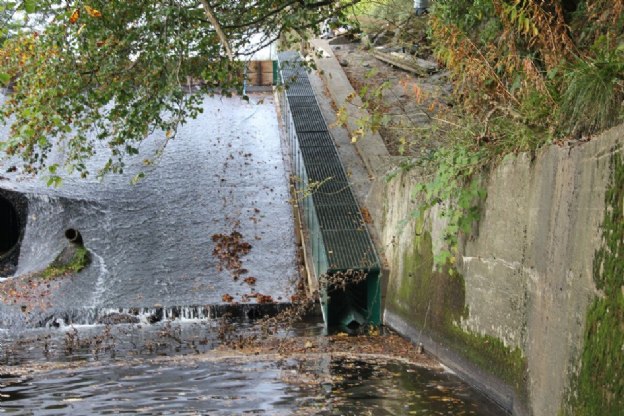
76 miles of habitat were opened up for salmon and sea trout on the River Dee in 2014 with the completion of a fish pass on the Culter Dam at Peterculter, the largest man-made obstruction on the river. For over 200 years the dam had prevented fish from accessing the Culter Burn, which is the second largest tributary of the Dee. The work on the Culter Dam was delivered by the River Dee Trust with technical support from the Dee District Salmon Fishery Board.
The fish pass on the Culter Dam allows migratory salmon and sea trout to re-establish natural populations upstream. It also kickstarted further habitat restoration work in the Culter Burn which will provide enhanced habitat for freshwater pearl mussels, otters and a list of other species. Once restoration work is completed the Culter is expected to create an additional 1,500 salmon returning to the river each year.
Culter Dam was the first and most important step in removing a total of four obstructions and re-establishing natural habitat of the Culter catchment. Weirs further upstream, on the Loch of Skene and Waterton Loch, were also barriers to migratory fish until a fish pass was installed at the outflow of Loch of Skene, whilst work at Waterton Loch involved the creation of a 40m bypass channel for fish to travel upstream of the dam. Fish passes on the Loch of Skene and Waterton Loch have been supported by SEPA’s Water Environment Fund and with the support of Dunecht Estate.
To monitor the success of the Culter Dam fish pass, a Vaki fish counter was installed to record how many fish use the pass to ascend the dam. The counter records the length of each fish which indicates whether it is a salmon or brown or sea trout. In practice, there is some size overlap, particularly between small salmon and large sea trout. Our scale data showed around a 6% error in these classifications.
The removal of obstacles such as Culter is part of a long term strategy of the River Dee Trust and Dee District Salmon Fishery Board to open up habitat and restore the Dee. Since 2007 the two organisations have removed or eased 27 man-made structures from the River Dee’s tributaries. The aim of this work is simple: to allow fish access to their natural spawning and rearing grounds.
News articles related to this project:
Culter Dam Fish Pass Complete
76 miles of habitat have been opened up for salmon and sea trout on the River Dee with the completion of a fish pass on […]