

 Ambitious recovery programme launched as unprecedented decline in pearl mussel highlights fragile River Dee
 DeeWatch December
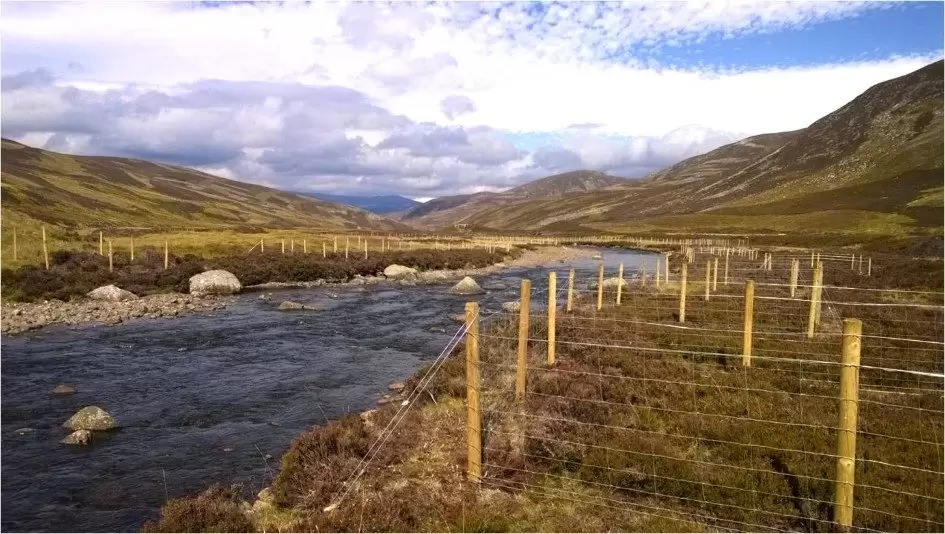
DEFRA predicts an approximate 4°C increase in mean summer temperatures by 2080 for the Deeside area. This is extremely concerning for the status of salmonids and species that rely on them, including the critically endangered freshwater pearl mussel. The impacts of temperature increases will be particularly damaging to wildlife in watercourses in the upper Dee area because of the lack of trees along the riverbanks. Trees provide shade, protecting watercourses from direct sunlight and heat. Their roots also stabilise banksides so when trees are absent the lack of tree roots allows bank erosion to occur, and this results in the stream channel becoming wider and shallower. Bank erosion is made worse by deer and livestock.
The Upper Dee Riparian Woodland Restoration Scheme aims to reduce these effects by establishing native trees over 70 kilometres of riverbank in the upper catchment. As they grow, these trees will help to reduce water temperatures during the summer months in these crucial salmon spawning and nursery areas, stabilise banks and reduce sediments entering the river, and provide habitat for a range of terrestrial species.
The delivery of this hugely ambitious £2.4 million project was funded by the EU LIFE+ Pearl in Peril project, with support from a range of agencies and organisations.
Since 2013 The Dee District Salmon Fishery Board (DDSFB) and River Dee Trust (RDT) have planted over 140,000 native trees along the river banks of the upper Dee and its tributaries, including the Geldie, Ey, Gairn, Clunie, Baddoch, Callater, Slugain, Gelder and Muick. This vital restoration work is delivered by working closely with land owners and managers, ensuring that areas of riparian woodland do not compromise the primary land management for grouse and deer. The project works with the Estates of Mar Lodge, Mar, Invercauld and Balmoral. The DDSFB/RDT have built up strong relationships with land managers in the upper Dee catchment, as the salmon fishery on Deeside has an important cultural and economic role to play, similar to that of grouse shooting and deer stalking. Working closely with keepers, shepherds and land managers we have designed all riparian tree planting to maximise benefits for salmon without negatively impacting the movement of deer or disrupting traditional grouse drives. Riparian trees will lower the summer water temperatures in these important salmon nursery streams, both through direct shading of the watercourse and by cooling the ground water as it flows through the riparian zone. Riparian woodland also benefits salmon through: provision of insects for their diet; increased nutrients through leaf drop; and large trees and branches that fall into the stream will create spawning gravel and cool deep resting pools, protecting fish from predators. Trees also reduce the speed of water runoff from the surrounding land to reduce peak flood levels, and an increase in general biodiversity includes a wider variety of species such as black grouse, capercaillie and woodcock. In June 2019 the DDSFB won funding from SNH’s Biodiversity Challenge Fund (BCF). Working with local estates the “10,000 tree” project will now continue this restoration. As the trees will take decades to mature and fall into the river, the project will also see the installation of large woody structures in the rivers Gairn and Muick to provide essential pools and spawning gravel. To achieve a significant reduction in summer temperatures and improve upland stream habitat, this work needs to be carried out on a catchment scale. With the continued support of the estates on upper Deeside we will continue to create riparian woodland and continue to involve volunteers from the local communities. In the decades to come and with increasing climate variability the fences protecting the trees will come down and land animals will also benefit from the shade and shelter.
| January 2015 | 40km of riverbank were planted, towards the 70km target to be completed by the end of 2015 |
|---|---|
| January 2014 | Over half of the small enclosures to be created as part of Pearls in Peril Project on the Dee are now complete. |
| May 2013 | Riparian tree planting on the upper Dee is underway with the first three enclosures created on the bankside of the River Gairn tributary. |
| January 2013 | Two part-time Agricultural Project Officers are employed by the Pearls in Peril Project to be based at the River Office in Dinnet. |
| 2012 | A bid has been made for EU LIFE+ funding with a decision being expected in April 2013. |
| 2011 | Working with landowners and managers in the upper reaches of the Dee, oppertunities for restoring riparian woodland have been identified and agreed. |
| 2010 | Scottish Native Woods have been contracted to identify the opportunities for establishing riparian woodland in the upper reaches of the Dee catchment. |
| 2008 | This project, instigated by the Dee DSFB and River Dee Trust, is being progressed as part of the work of our Flow Management Group. The Cairngorms National Park Authority, the River Dee Trust, and Forestry Commission Scotland will be leading the next stages of the work. |