

 Ambitious recovery programme launched as unprecedented decline in pearl mussel highlights fragile River Dee
 DeeWatch December
In September…
Autumn arrives in earnest this month with the equinox on 22 September, bringing more darkness than daylight until March. Along with cooler temperatures, this change in daylight can be a trigger for changes such as animals migrating, hibernating or moulting into new coats to escape from, or prepare for the coming winter. Deciduous trees and plants also respond by preparing to shed their leaves to avoid water loss and also storm damage in winter. Their leaves are on the turn – the production of the green pigment in the leaves, chlorophyll, slows and eventually stops, revealing yellow and orange carotenes that are normally hidden. You can find out more about how the weather affects leaf colour here.
Look out and listen for:
Birds
The last of the ospreys that spent the summer fishing on the Deeside lochs or the river and its tributaries are leaving for Africa. House martins,sand martins and swallows, feeding up on insects ahead of their epic journey back to the southern hemisphere, may now be seen gathering together in flocks perched on overhead wires in both our towns and countryside.
Meanwhile pink-footed and greylag geese are returning to Scotland’s relatively warm north east, from the increasingly cool Arctic countries where they bred. The first pink-footed geese from Iceland were seen last week at Loch of Skene – almost a fortnight early; they probably hitched a lift on northerly winds.
You may spot dippers going to their winter roosts this month, such as nooks and crannies under bridges, or colourful jays stashing acorns – a single jay can store as many as 5,000 acorns in a season! If you come across a solitary oak seedling in a conifer woodland, there’s a good chance it grew from an acorn that a jay has forgotten about. Listen out for the robin’s song, which changes in the autumn to a more subdued and melancholy tone.
Butterflies, moths & insects
There are still plenty of butterflies about on sunny days, especially red admirals attracted to ivy blossom or garden flowers such as hebe or sedum. They and commas also love the juices of overripe fruit like brambles and apples. Many red admirals may start a return migration south, but some may now be overwintering here. Some peacocks and small tortoiseshells are also still stocking up on nectar and others have already entered hibernation to conserve energy for breeding next spring – which explains why you may find them now in your garage or garden shed. Look out for them on garden plants like buddleia.
Many moths emerging now are camouflaged against autumn leaves, such as the canary-shouldered thorn and the pink-barred sallow, often only seen coming to lights at night. If the weather is favourable with south east winds, September can be a good time for continental migrants such as the convolvulus hawk-moth, whose extremely long proboscis can reach into the tubular flowers of nicotiana.
Look out for elephant hawk moth caterpillars – they’re often found in gardens in late summer.
Nocturnal moths may also be drawn to feed on over-ripe fruit as well as nectar-rich flowers at this time of year – search for them with a torch or you can make your own sweet, scented concoction, that works best on mild nights with a breeze to disperse the aroma (‘wine ropes’ or ‘sugaring’). The old lady moth, so-called as it ‘wears’ a big brown ‘cloak’, is mostly spotted in river valleys and on the wing from July to September, and rarely comes to light traps but is more often drawn to sugary bait.
Early autumn is a good time to spot spiders such as four-spotted orb weavers and garden spiders. Both are orb weaver species that spin the classic, spiral web of sticky strands of silk on a non-sticky silk framework. You can see different types of spider webs most easily on misty mornings when they are coated in dew and strewn across vegetation, revealing just how abundant spiders can be in a small area. Many spiders reach maturity in early autumn, when males are seeking females. With web-building spiders you may sometimes see a smaller male cautiously entering a female’s web – as he approaches, he has to send specific courtship vibration signals, tapping her silk threads to avoid potentially becoming dinner!
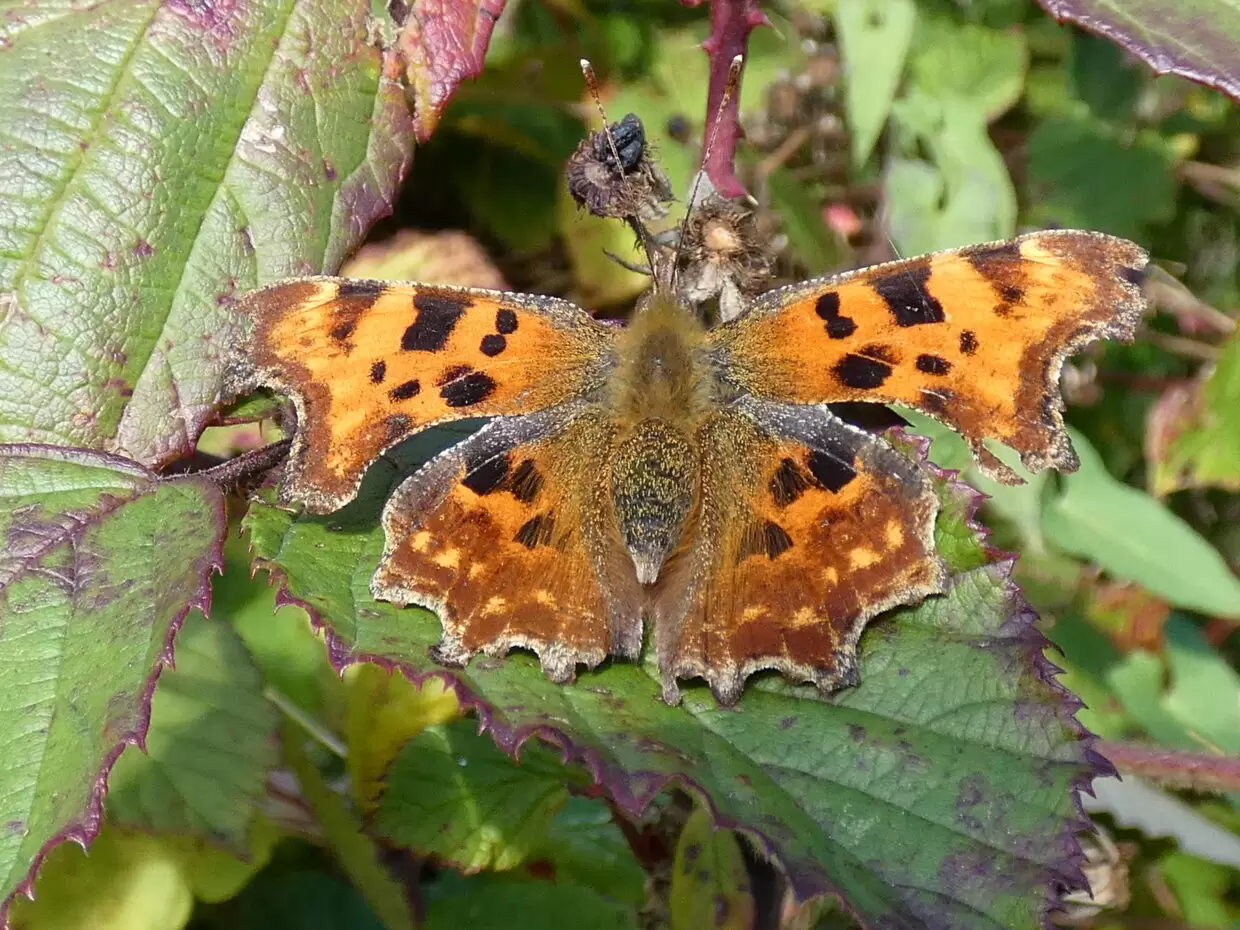
Comma 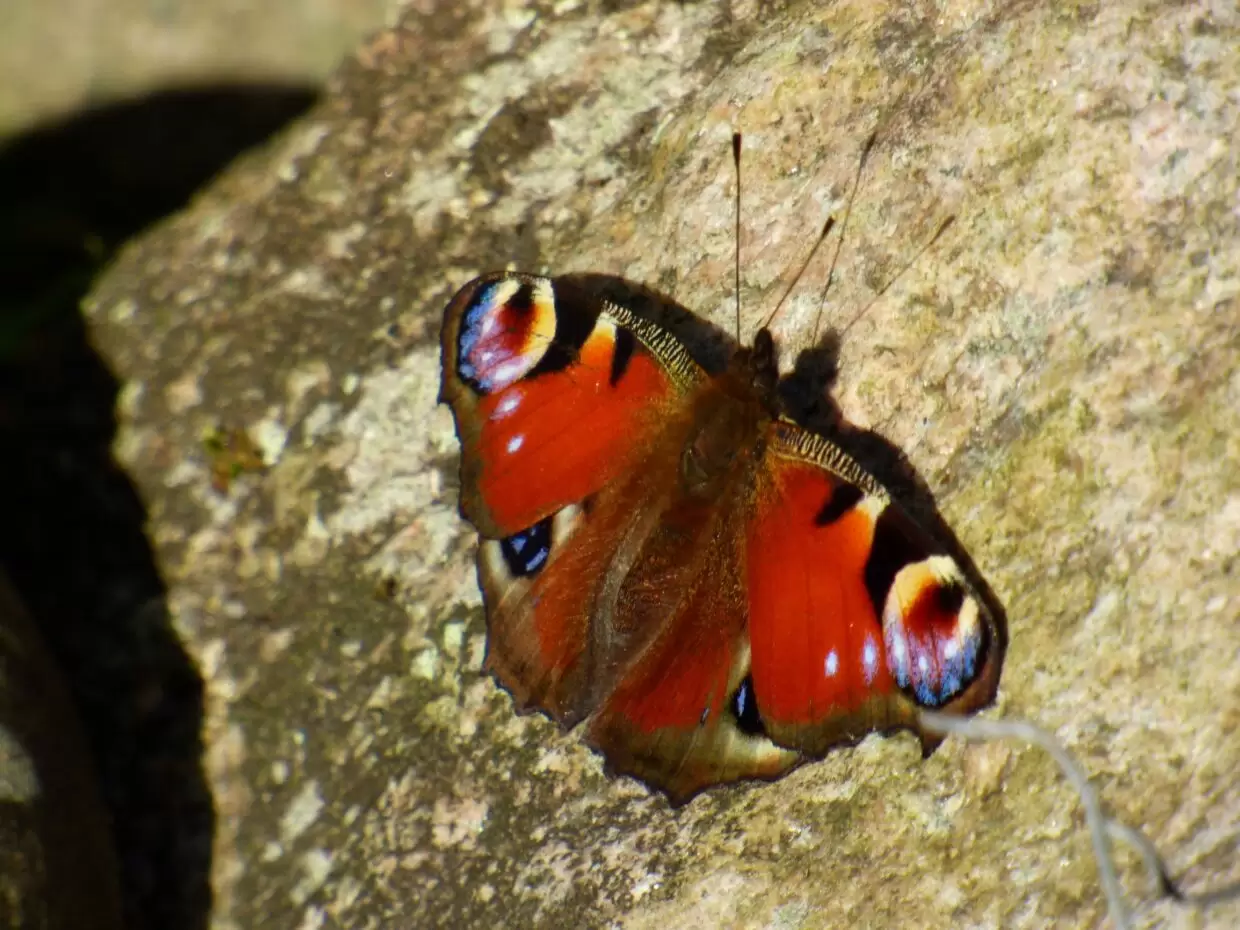
Peacock 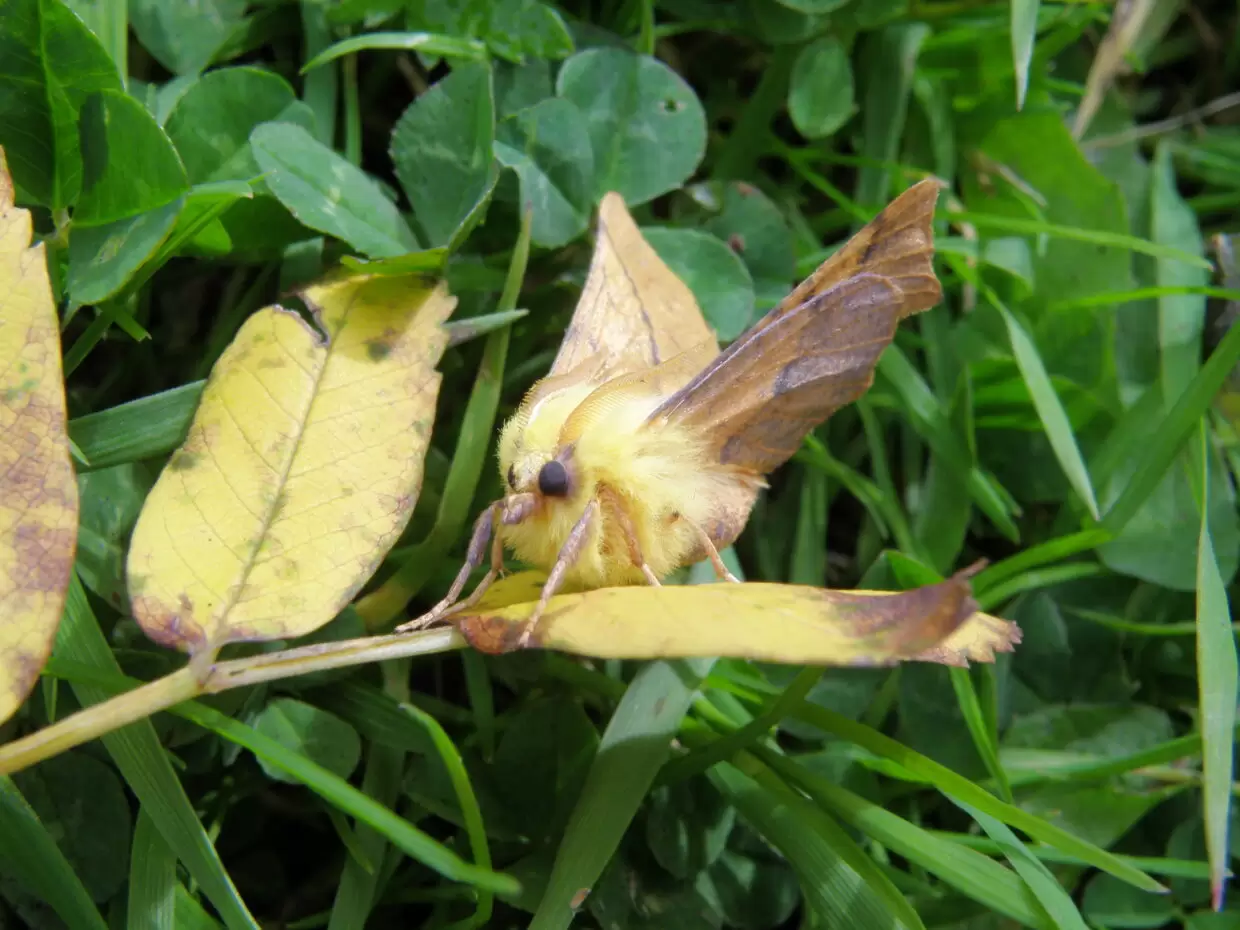
Canary-shouldered thorn 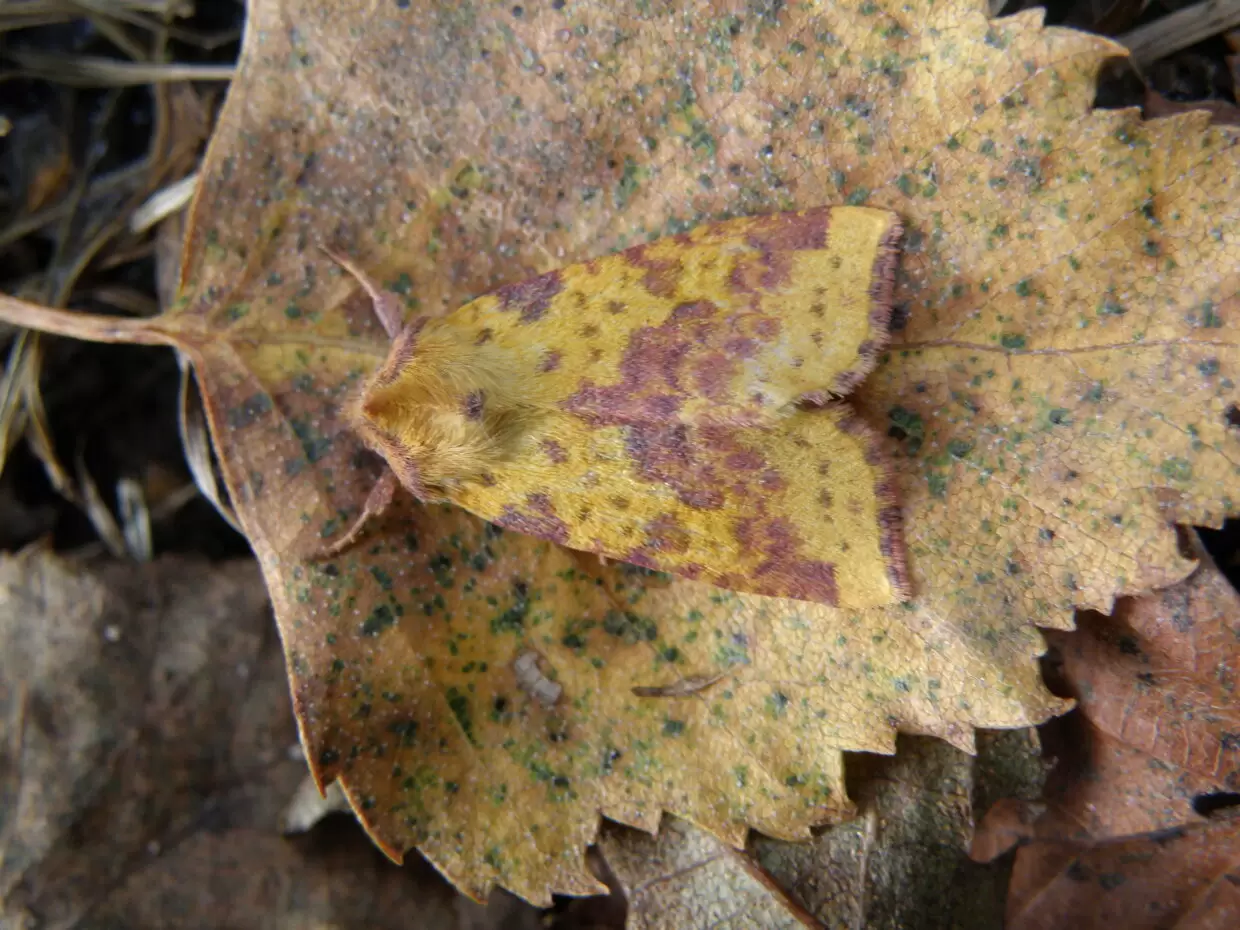
Pink barred sallow 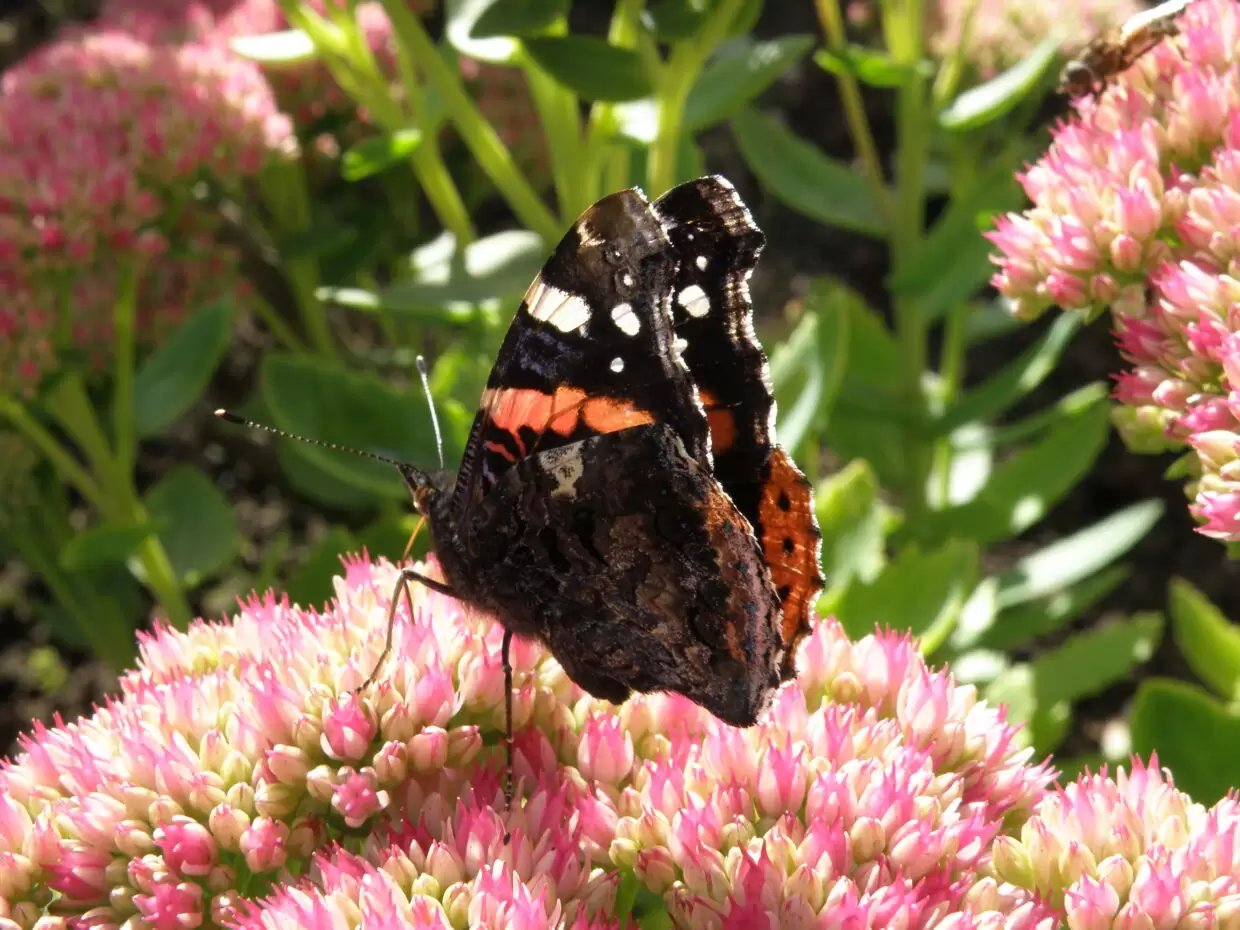
Red admiral 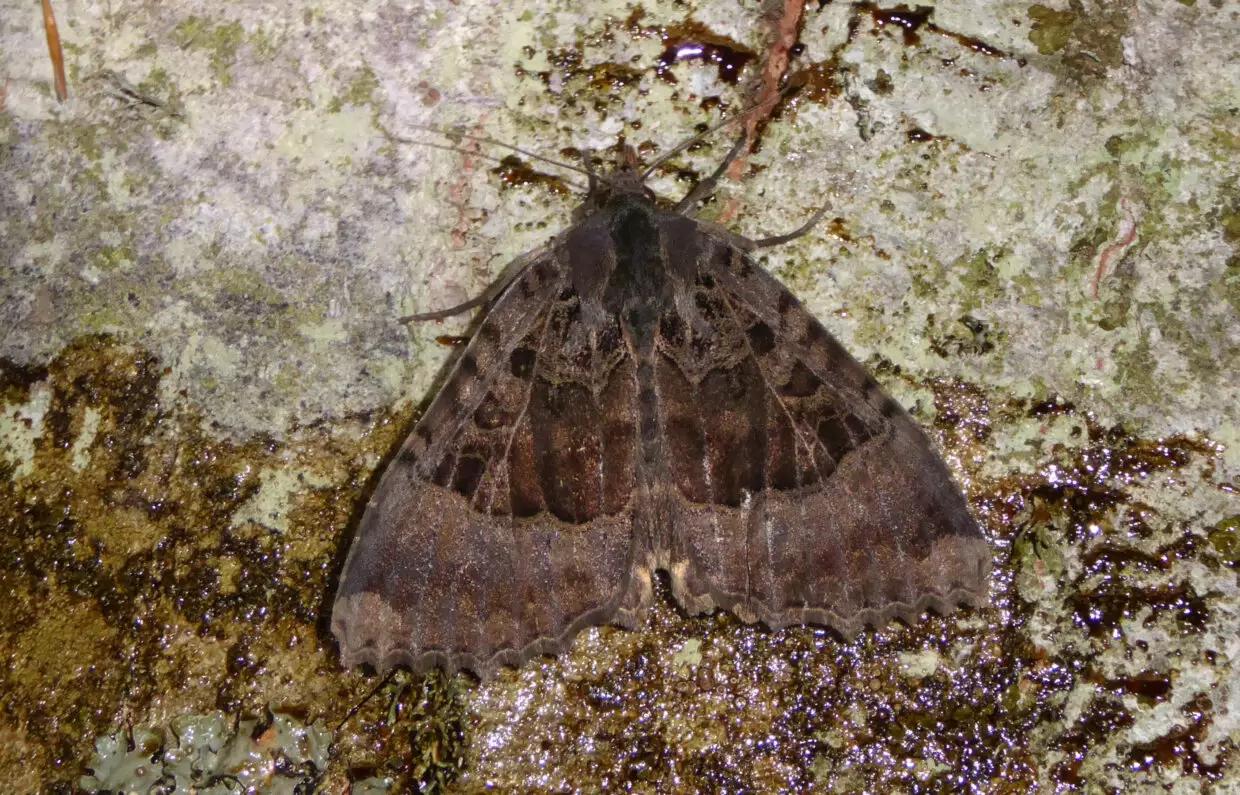
Old Lady 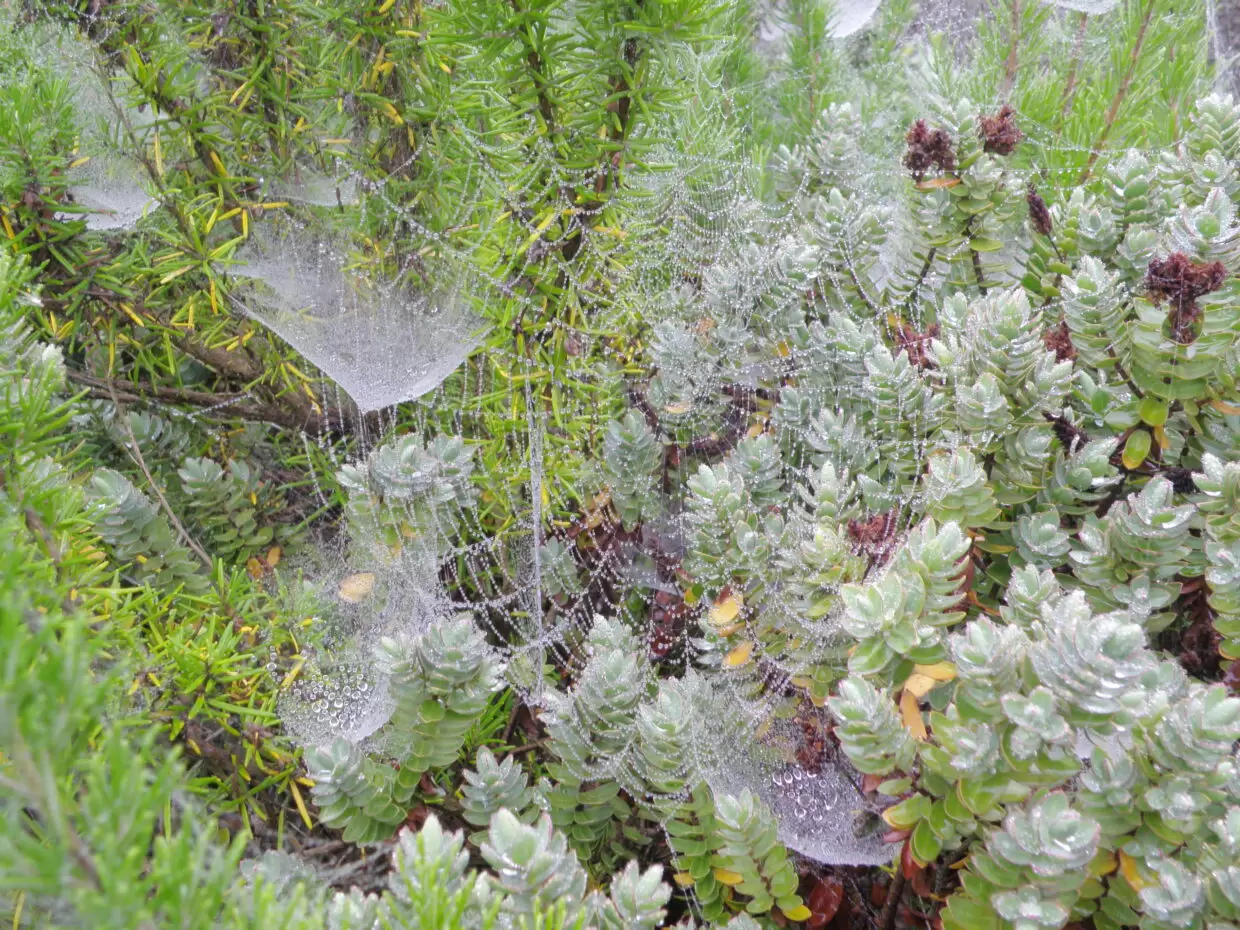
Spiders’ webs in the dew 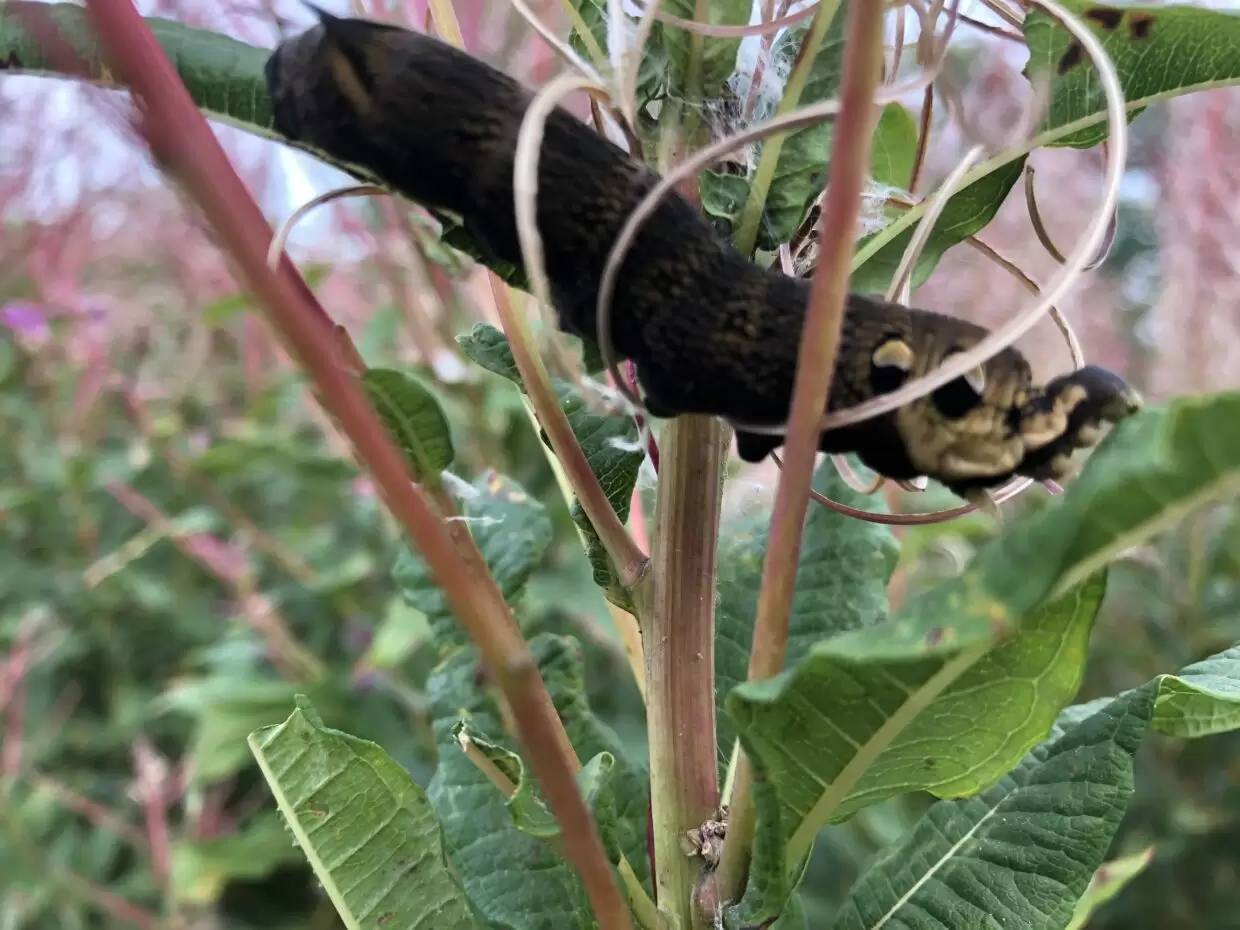
Elephant hawk moth caterpillar 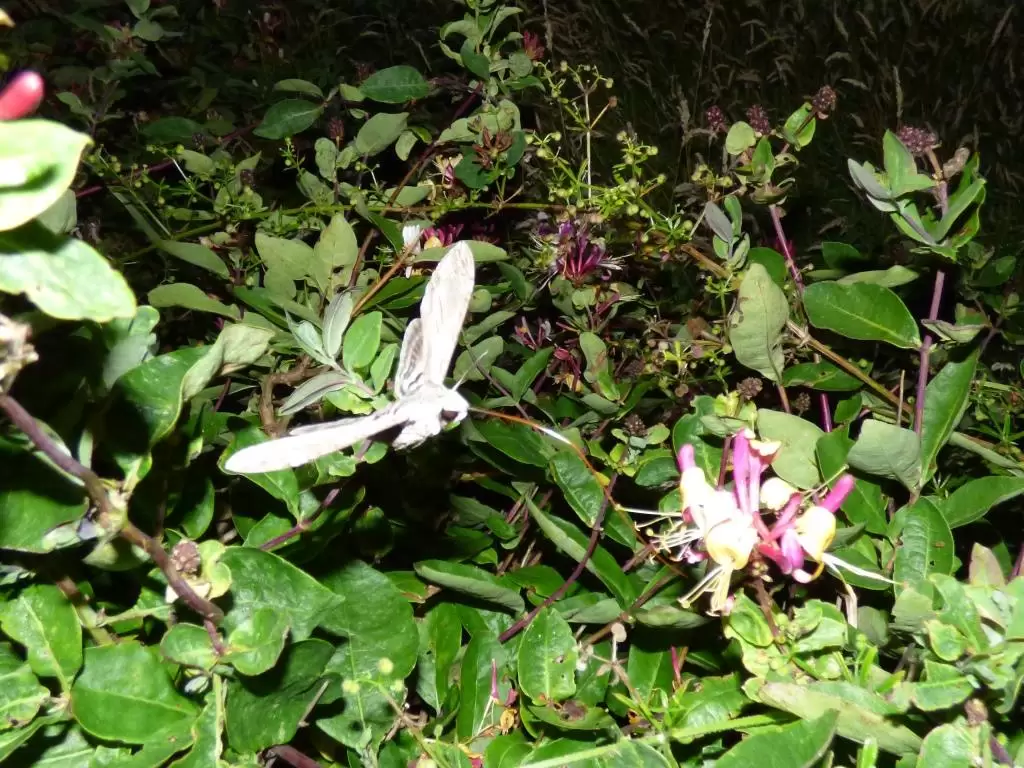
Convolvulus Hawk Moth
Mammals & other larger animals
As the days shorten and dawn is later and dusk earlier, you have a better chance of spying bats in the evening, or perhaps on an early morning dog walk, feeding up on insects before they begin their winter hibernation.Most common are the pipistrelles and brown long-eared, which often roost in buildings.The bats’ mating season also begins this month. Males often use special calls to attract females, which can include ultrasonic purrs, clicks, and buzzes.
Red squirrels are beginning to hide their food – anything from nuts and fungi to shoots and fruits. You might even see fungi placed high up in tree branches at this time of year; these have been left there by the squirrels, who leave them out to dry before hiding them away for the winter, alongside a healthy stash of seeds and nuts! The Great Scottish Squirrel Survey runs from 21-27 September – you can get involved and record your sightings here: https://scottishsquirrels.org.uk/great-scottish-squirrel-survey/
In the upper reaches of the Dee, red deer are in peak condition and stags disperse from their bachelor groups in preparation for the rut that happens between late September and early November, when they compete for a chance to mate with hinds – activity tends to be triggered by the onset of frosts. Head to Glen Muick or Glen Clunie to be in with a chance of seeing them, and hearing that unforgettable roar of a stag challenging a rival.
Adders may still be giving birth this month – along with slow-worms and common lizards, they produce live young in late summer/early autumn, which is unusual in reptiles, most of which lay eggs – incubation inside the body is an adaptation to our cooler climate.
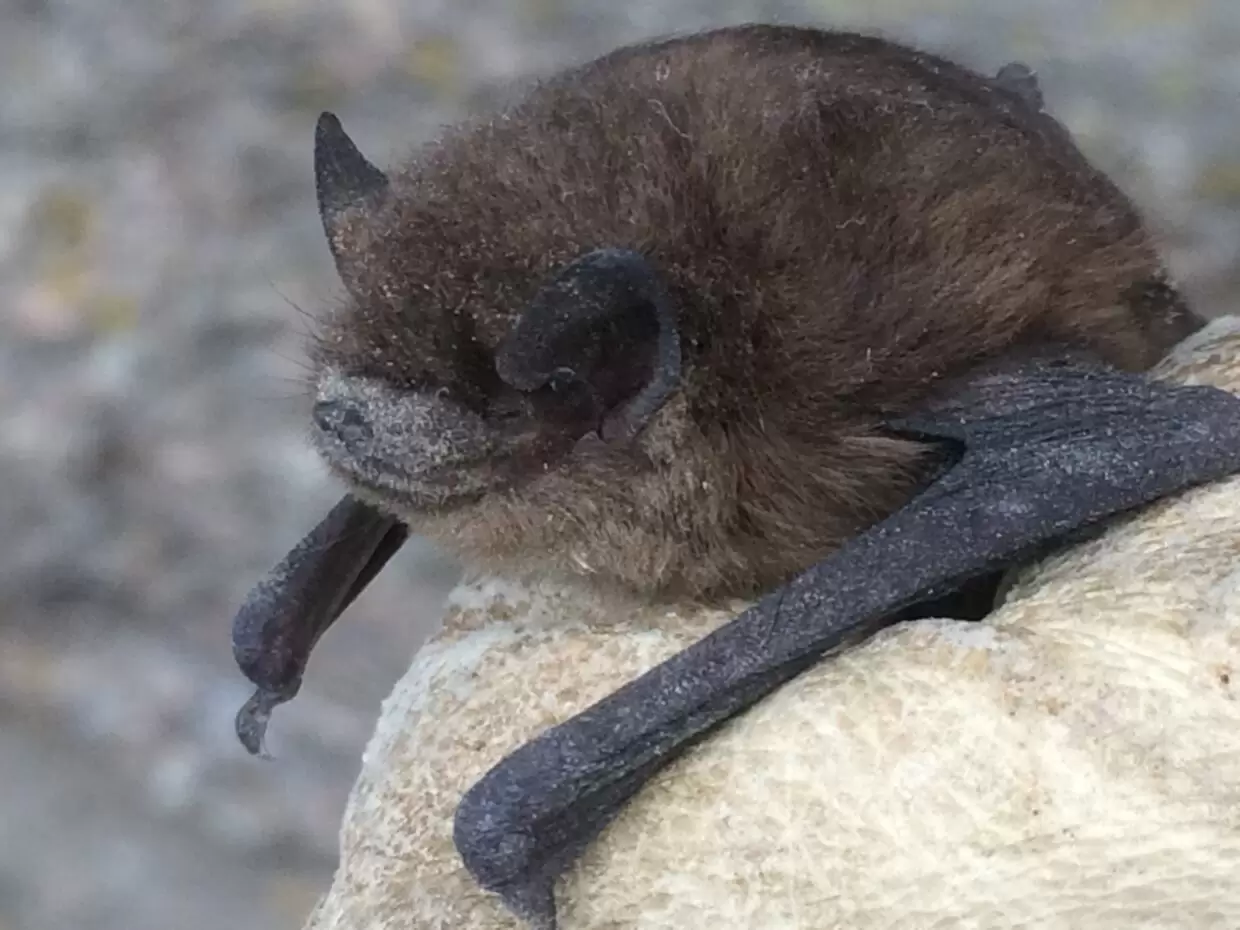
Pipistrelle bat 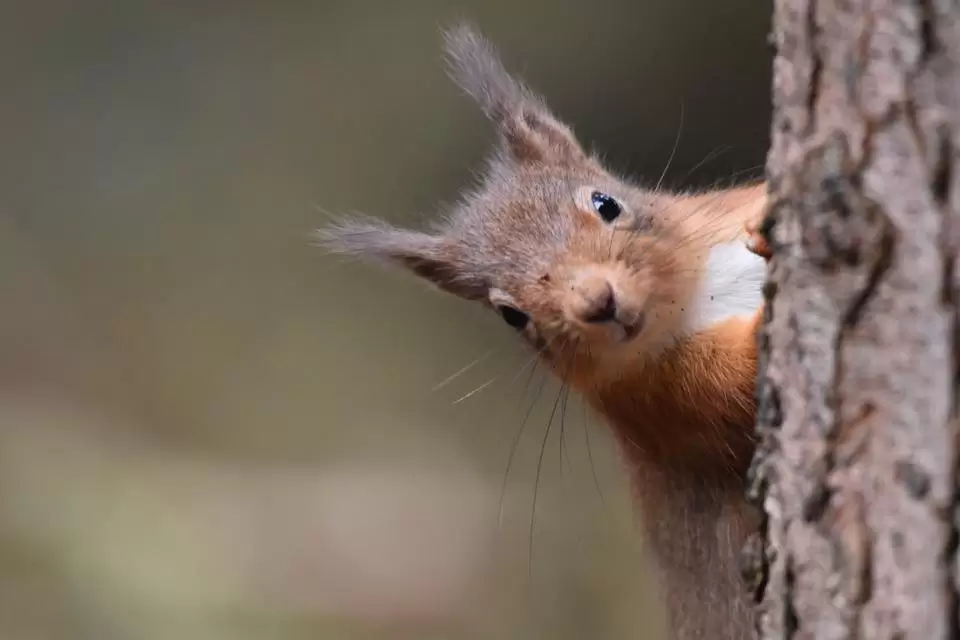
Red squirrel
Trees, flowers, fruits & fungi
Trees across the catchment will begin to turn this month, with autumn colours already visible in a number of species such as silver birch, beech and horse chestnut. These contrast with evergreen Scots pines and Douglas firs – savour these trees in all their autumn splendour on a walk through the estates of Glen Tanar or Mar Lodge.
We bid farewell to the last of the wildflowers this month, such as yarrow and tormentil, though some late flowers such as devil’s bit scabious are still an important source of pollen for bees. It’s the month for fruits – blackberries are ready, and the rowan berries have reddened, providing food for many birds. Sloes are ripening too, brightening the boughs of blackthorn bushes in many a hedgerow.
Listen out for broom pods making a snap, crackle and pop sound as they explode in the sunshine.
A range of fungi can be found across the catchment thanks to the sheer variety of special habitats, from old oak woods to birch woods and the older Scots pine forests. Fungi and trees are closely connected, often forming mutually beneficial relationships underground via the roots of trees – the tree gets extra water and nutrients from the soil via the fungus, while the fungus gets sugars from the tree.
Look out for the iconic, brightly-coloured fly agarics in birch and pine forests – the red and white-spotted toadstool of fairy tales. You might also see russulas with their white stem and coloured caps which range from reds and purples to yellows and greens, and hedgehog mushrooms, with spines rather than gills under a pale cap. Edible chanterelles and ceps may be found too, but we’d advise against eating anything unless certain of its identity – you only need to get it wrong once, and the consequences may be fatal. Bay boletes often occur under birch trees, with pores rather than gills beneath their caps. These can blush an amazing blue colour if damaged. In grasslands you may spot shaggy ink caps and colourful waxcaps. Identifying fungi can be tricky but help is at hand! Check out the Grampian Fungus for more information.
You might also want to look out for the non-native invasive species of Himalayan balsam, and report any sightings to the North East of Scotland Biological Records Centre. You can find out more about how to tackle it here: https://www.nennis.org/identify-and-control-invasive-plants/key-species-and-their-control/himalayan-balsm/
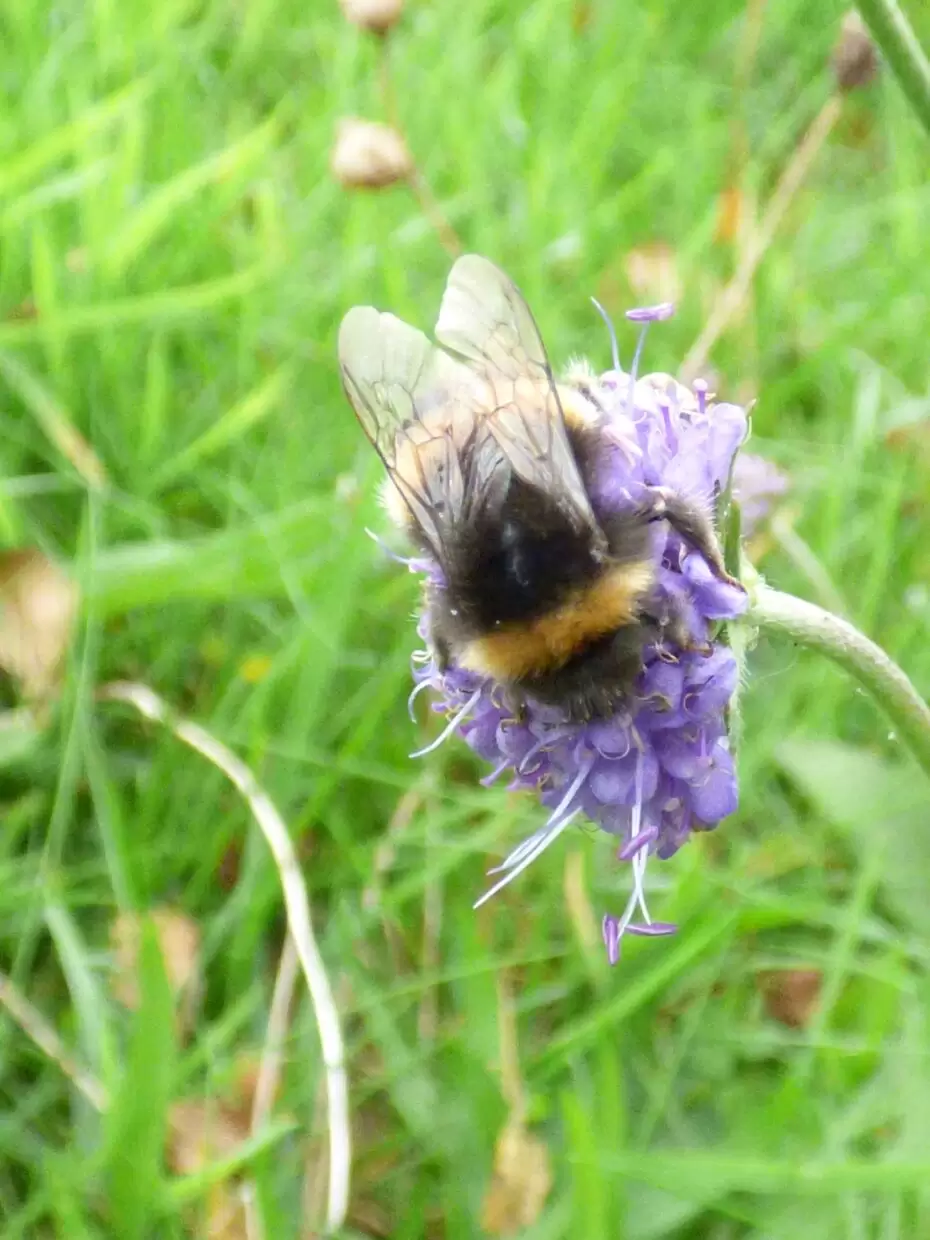
Bee on devil’s bit scabious 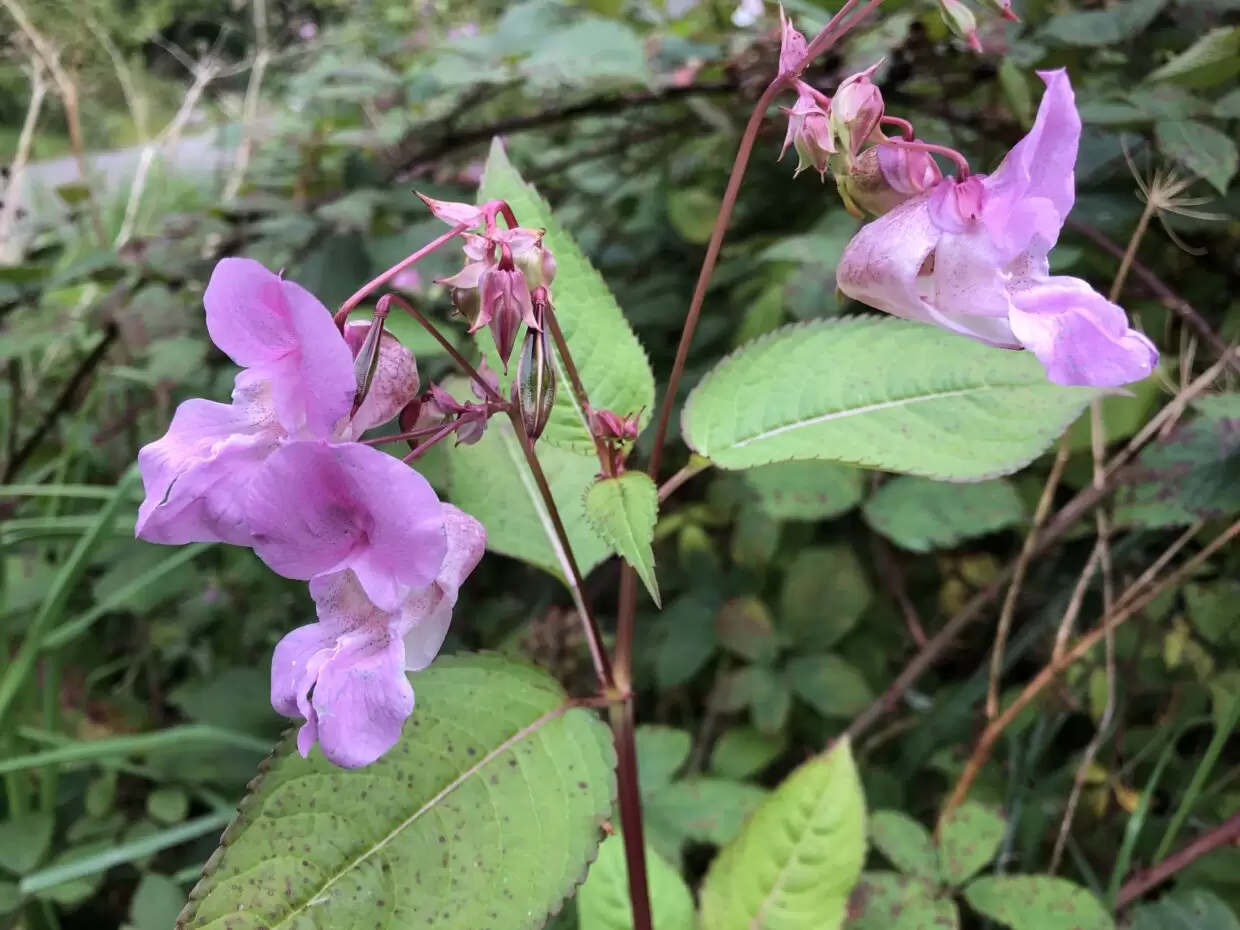
Himalayan balsam 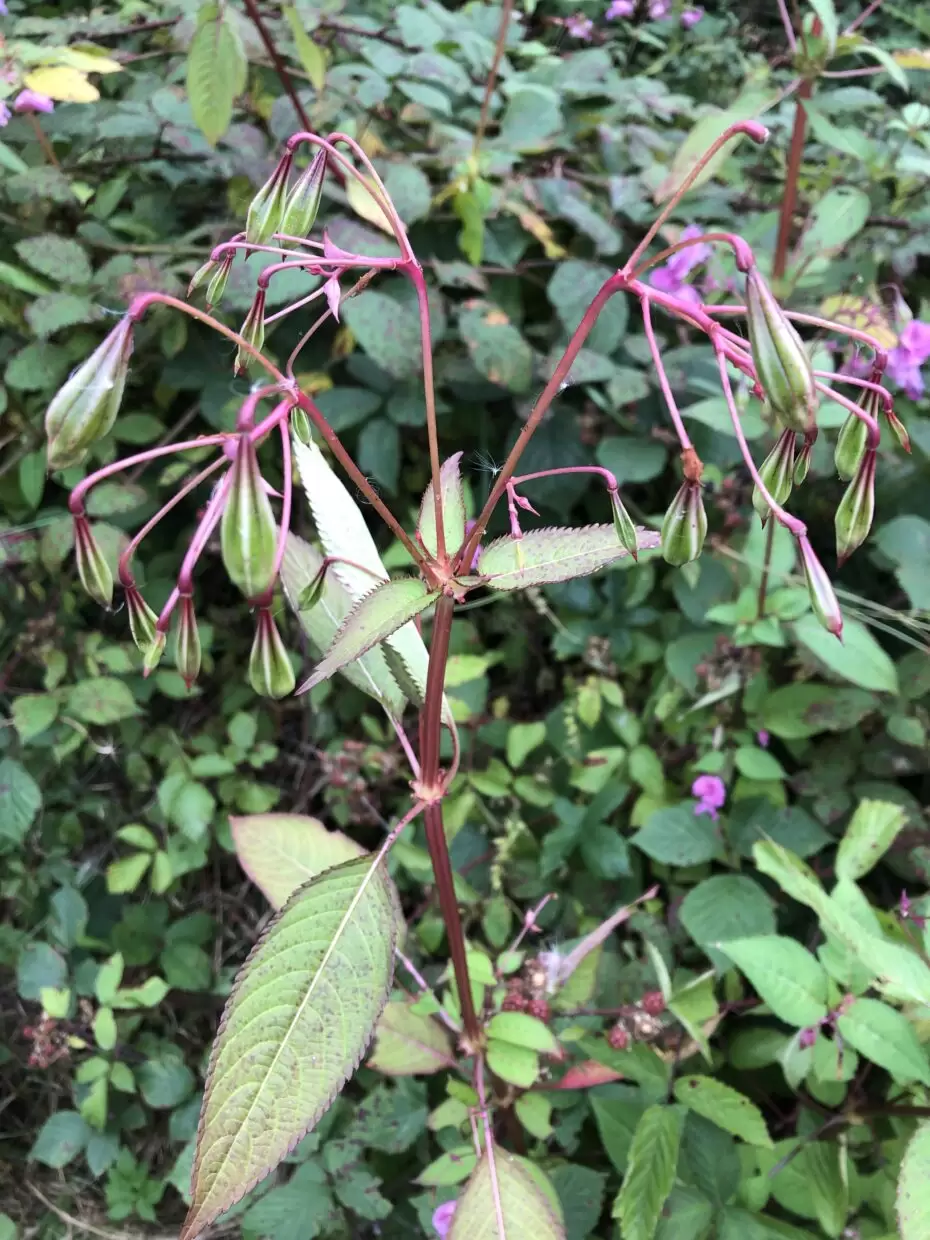
Himalayan balsam seedhead
On the river
Many mature salmon are returning from the sea and making their way up the river and its tributaries to go back to where they were born so they can reproduce themselves later in autumn/early winter – they cease feeding on entering the river and all their stored energy is used to reach the spawning grounds. The Falls of Feugh is a great place to watch them leaping to try to ascend the waterfalls – they often make a number of unsuccessful attempts before eventually making it up and can be helped or hindered by the level and flow rate of the water – a good time to look is when there has been rain after a dry spell.
What’s on?
- Great Scottish Squirrel Survey 21-27 September
Keep an eye on the Facebook pages below for event updates and more information about what’s going on in nature – and remember there may be virtual events if face-to-face events aren’t going ahead.
Aberdeenshire Council Ranger Service
North East Scotland Ranger Services
The North East Scotland Biodiversity Partnership (NESBiP) shares nature news relevant to our area on the NESBiP Facebook page and its wildlife gardening group has some ideas for attracting wildlife you might like to try out yourself.
And consider helping to make a valuable contribution to our wildlife records by sending any of your sightings to NESBReC and keep an eye on their Facebook page for training events