

 Ambitious recovery programme launched as unprecedented decline in pearl mussel highlights fragile River Dee
 DeeWatch December
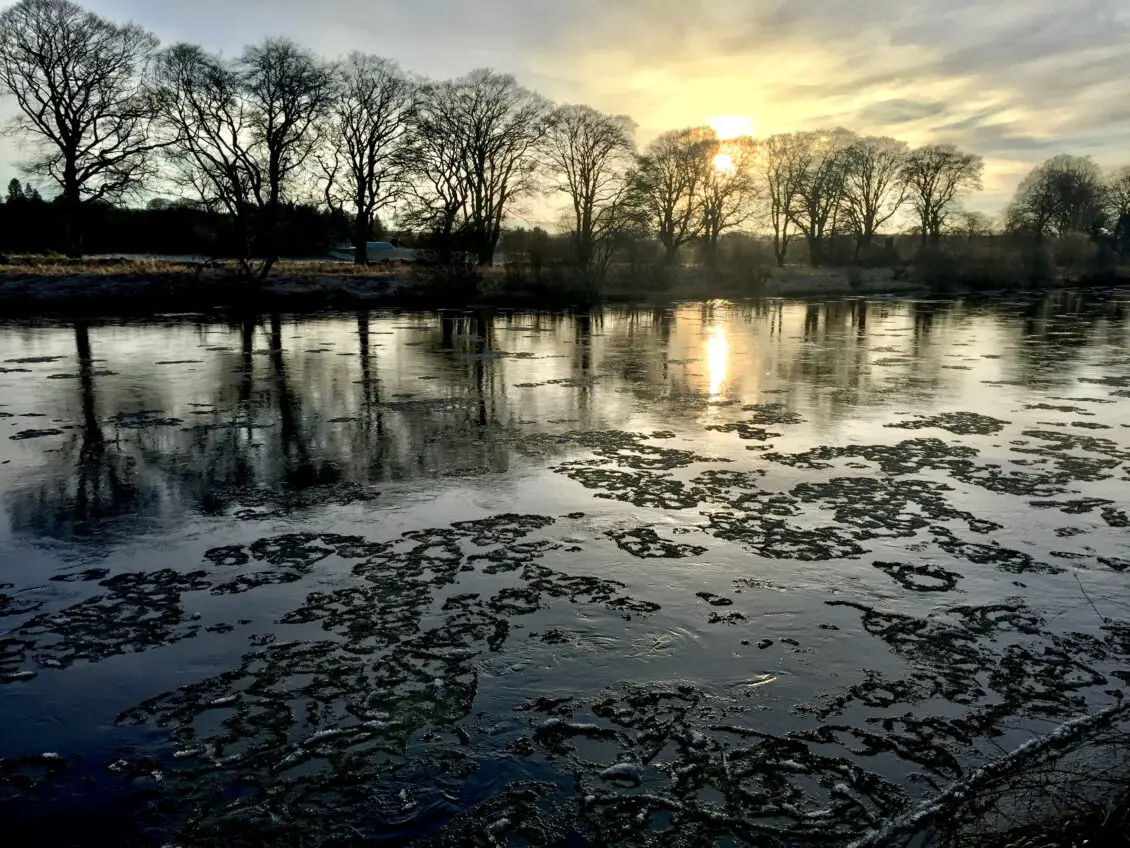
In January…
With beautiful low sun, iciclesand bare tree silhouettes, January is the perfect month for nature photography, so get snapping! By the end of the month there’s noticeably more daylight, and if the weather stays mild there’ll be signs of Spring. Look out and listen for:
Birds
January is a great time to see bullfinches as they move around in small flocks of six to eight, feeding on seeds. They’re easy to spot on the Mar Lodge Estate, feeding on heather seeds and birch buds. At Crathes you can find them feeding on fallen seeds under the acers, and you can get quite close to take photos if you creep up on them. Look out for the long tailed tit – they move around in small flocks and you usually hear them before you see them.
Blackbirds and song thrushes may be beginning to visit ivy this month – they tend to go for the non-toxic rowan berries first as they perish more quickly, and leave the mildly toxic ivy berries till later in the winter. According to the RSPB, ivy berries contain nearly as many calories as Mars bars, gram for gram! Ivy is also a great nesting spot for birds such as robins or wrens, and for insects to overwinter.
You might spot lesser redpolls with their red caps and black bib. Jays head back to their buried acorns late this month. High in the catchment, red grouse form large groups in the snowy weather, and you can often see them flush when a bird of prey flies over. When night falls, listen out for both tawny and barn owls – they’re noisy just now!
Butterflies, moths & other minibeasts
January is a quiet month for moths, but winter moths are around andthe first pale brindled beauty moths of the year appear. Both species have flightless females and pale brindled beauty females are totally wingless. These species don’t feed as adults, relying on stored energy to reproduce in the few short days of their adult life. Chestnuts that overwinter as adults may also fly on mild nights.
Mammals & other larger animals
With the leaves off the trees and vegetation dying down, January is a good time to spot mammals. Look out for otter tracks on ice at the edges of rivers. You may find redsquirrels at CrathesCastle, where the wildlife hide is the best place to sit and watch them, especially in the early mornings. Built by a variety of volunteers, the hide is on the South side of the Estate and open all year – follow the old East trail to find it. When fresh vegetation is limited orinaccessible in frozen ground, deer browse on evergreen conifer branches, and chew on tree bark.
In the right conditions, snow-tracking animals is fascinating – see what has been about by identifying prints in the snow, with a little help from the Mammal Mapper app, which allows you to map tracks on a ‘survey’: https://www.mammal.org.uk/volunteering/mammal-mapper/You may see evidence of badgers and moles – mole hills standing out in snow, or badger scratchings from where they’ve been looking for worms in the ground, before returning to their setts for days of sleep.
Trees, flowers, fruits & fungi
While the trees are bare, you may see flowering catkins on hazel trees and bushes. By the end of January the male flowers startto lengthen and grow. Hazels are one of the first to appear, but the female flowers are harder to spot – they look like buds, with tiny red flowers. Look out for the first snowdrops and tips of daffs and bluebells starting to poke through the soil. Wintermonths are a good time to see hair ice.
On the river
Dippers sing in January – they start their spring courtship early. Here’s a close-up clip of a dipper singing: https://www.youtube.com/watch?v=sk813MSmMYQ
They’re called dippers because of the dipping motion they make while patrolling rivers and burns. A much older name for them is ‘water ouzel’ – it used to be grouped in the thrush family and has a white bib like the ring ouzel that is a true thrush. In Aberdeenshire they’re sometimes known as ‘ess cocks’. Other names for the dipper across Scotland include ‘water blackbird’, ‘water bobbie’, ‘water cock(ie)’, ‘water craw’, ‘water meggie/peggie’ & ‘water piet/pyot’. The species is usually found around fast-flowing water full of the invertebrates it feeds on. They often hunt completely submerged underwater, searching for stonefly, mayfly and caddisfly nymphs, and freshwater shrimps among stones on the riverbed.