

 Ambitious recovery programme launched as unprecedented decline in pearl mussel highlights fragile River Dee
 DeeWatch December
They are more commonly found in the Antarctic or the Baltic Sea, but rare "ice pancakes" were found on the River Dee by River Dee Trust Biologist Jamie Urquhart earlier this month.
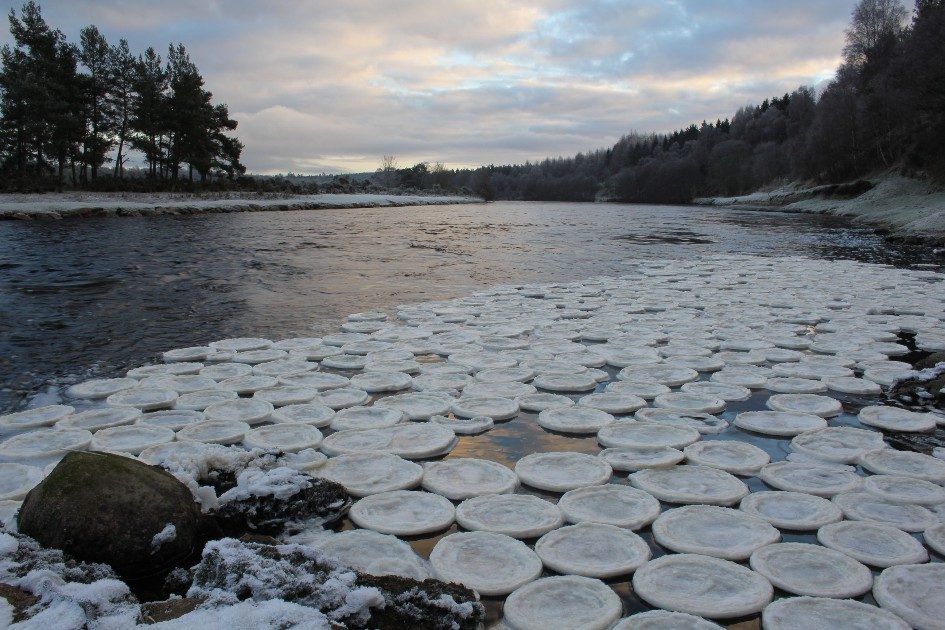
Jamie has seen them before on the River Brora in Sutherland, but they were much smaller, the size of saucers. The pancakes on the Dee were the size of dinner plates and around 100 were found on the Lummels Pool at Birse, near Aboyne.
They were formed in a pool downstream of a fast flowing part of the River, where the foam and froth gathers and circles together. It is believed the foam froze overnight, and as it bashed into other frozen pieces the pancakes were formed. It is thought the rim was created due to rising temperatures during the day and the cooler nights.
The story from the River Dee Trust has caused alot of interest, appearing on the BBC Breakfast news and the One Show on Thursday 18th December. The story has appeared in a number of UK newspapers such as the Times and Telegraph and has even gone global appearing on CNN website and the Discovery Channel News Feed. The Trust were also approached by the Italian and Spanish branches of BBC World News looking for images and an explanation as to how these rare ice pancakes had formed.
The weather conditions must be just right for these to form with cold temperatures and frost, so if you are out and about in the Dee catchment keep an eye out for these rare ice formations and send us some photos.
You can see more photos on our Facebook and Twitter pages.
The BBC News article can be read here.